Comparative Guide: CRM vs. WhatsApp Business API in Israel
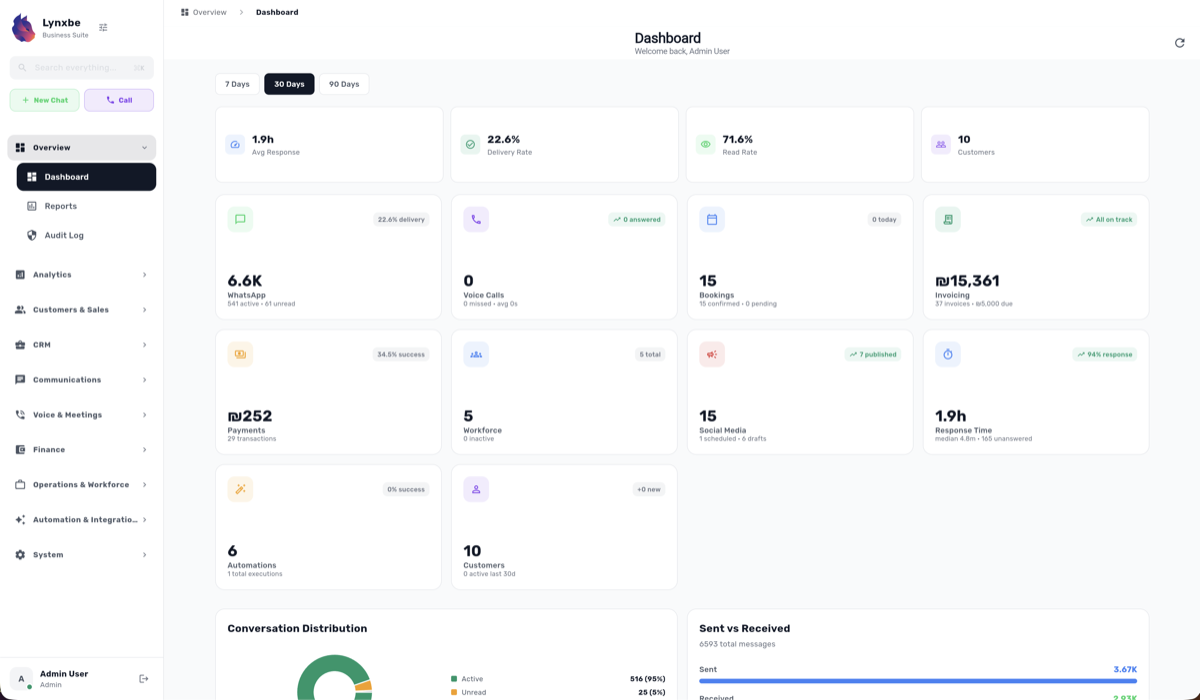
In the modern digital age, businesses in every field face new challenges regarding communication with customers. Whether it is small startup companies or large enterprises, the importance of Customer Relationship Management (CRM) is becoming increasingly central. But is CRM the only tool businesses should consider? With the rise in the use of WhatsApp Business API, businesses in Israel are grappling with the question: what is the best solution for them?
In this article, we will conduct an in-depth comparison between CRM systems and WhatsApp Business API, examining the advantages of each, how to choose the right solution for your business, and successful use cases from the Israeli market. In an era where availability and quick responses are critical for success, we will explore how the integration of these tools can enhance customer experience and operational efficiency.
We will start by understanding the advantages of each tool, see how they can interface with each other, and consider real-world examples that can inspire startups and developers in Israel. We will also provide a series of practical tips that can assist you in working with these tools.
So let’s dive into the world of CRM and WhatsApp Business API and understand what each of them has to offer.
Advantages of CRM vs. WhatsApp Business API
CRM (Customer Relationship Management) systems offer a wide range of benefits for businesses. The primary advantage of CRM is the focused management of all interactions with customers in one place. A CRM system allows tracking customer behavior, recording calls, managing tasks, and performing analyses based on data. All of this helps sales managers and customer service teams better understand customer needs and provide quality, personalized service.
On the other hand, WhatsApp Business API offers unique advantages aimed at improving communication with customers. The WhatsApp application is one of the most popular apps in the world, and the ability to send instant messages to customers is a significant advantage. With WhatsApp Business API, businesses can send messages, automate responses, and manage communication with customers more quickly and efficiently.
The significant advantage of WhatsApp Business API is the ability to create a fast and intuitive customer experience. Customers expect quick responses, and with WhatsApp, they can receive answers to their questions almost instantly. This is a cardinal advantage in an era where customers expect fast and available service at all times.
How to Choose the Right Solution for Your Business
When considering whether to choose CRM or WhatsApp Business API, there are several factors to take into account. First, you need to assess the size of your business and the number of customers you manage. If you have a complex interface with customers, a CRM system may be the right choice. A CRM system can manage all the information about customers, facilitate sales and customer teams, and improve internal processes in the business.
If you are engaged in direct sales or customer service, you should consider using WhatsApp Business API. The ability to send instant messages to customers and make direct calls can enhance the customer experience and increase conversion rates. Especially for businesses that rely on online sales, WhatsApp may be the most efficient way to communicate with potential customers.
Combining both tools can be the ideal solution. For example, you can use CRM to manage all customer information and interactions, while simultaneously using WhatsApp Business API to send instant messages and receive feedback from customers. This combination will allow you to streamline business processes and enhance the customer experience.
Successful Use Cases in Israel
In Israel, there are several prominent examples of successful use of CRM and WhatsApp Business API. For instance, the startup company "Pelephone" managed to enhance its customer experience by integrating both tools. The company used CRM to manage all customer information, while on the other hand, maintained direct communication with customers via WhatsApp. The result was a significant improvement in customer satisfaction and an increase in conversion rates.
Another example is "Maccabi Healthcare Services," which managed to streamline communication with members using WhatsApp Business API. With this tool, the company can send important messages and updates to members, upgrade communication, and enhance customer experience. The integration with the CRM system allowed the company to manage all inquiries in an organized and uniform manner.
When working with small businesses, "Elite Coffee" used WhatsApp Business API to stay in touch with its customers. Through instant messages, the company managed to establish stable relationships with customers, enhance shopping experiences, and improve access to essential information. The use of CRM helped the company manage all customer information and enhance service.
Integrating Tools for Smooth Operation
To maximize the benefits of CRM and WhatsApp Business API, it is important to consider the option of integrating the tools. This integration can offer a comprehensive solution that makes information accessible and allows for seamless communication with customers. For example, you can create automation of messages sent to customers based on data collected in the CRM system.
Additionally, you can implement data-driven marketing campaigns. Using information collected in the CRM system, you can send personalized messages to customers via WhatsApp, increasing the likelihood of a positive response. The combination of both tools helps streamline marketing and sales processes and enhances the effectiveness of each campaign.
To succeed in integrating the tools, ensure that different teams within the business are coordinated and trained on the various tools. Proper training can enhance the teams' ability to utilize the tools optimally and improve business outcomes.
Practical Tips
When choosing between CRM and WhatsApp Business API, consider several practical tips. First, you need to understand the specific needs of your business. Do you need an advanced information management system, or is immediate communication with customers your main focus?
Second, invest in training for different teams in the business. Practical tools like CRM and WhatsApp Business API can be very effective if teams know how to leverage their potential. Proper training will ensure that teams know how to manage interactions with customers in the most efficient way.
Finally, do not forget to check reports and statistics. Tracking tool performance can help you understand what works and what does not, allowing you to make adjustments in real time. Analyzing data will improve your ability to make informed decisions and upgrade business processes.
Insights and Conclusions
In conclusion, comparing CRM and WhatsApp Business API offers us many insights into how to manage customers in the modern age. Each of the tools offers unique advantages that can enhance customer experience and streamline processes in the business. It is important to understand the needs of your business and tailor the right solution.
The integration of a CRM system with WhatsApp Business API can provide an ideal solution that makes information accessible and enables quick and efficient communication with customers. There are many examples in Israeli businesses of successful uses of both tools, helping them enhance communication with customers and improve satisfaction.
Your next step is to explore how you can integrate these tools into your business. Investing in advanced technology can yield significant returns and upgrade your customer experience. Start today by implementing the tips provided in the article, and see how your business begins to improve.



Comments
💬 Share your thoughts