Comparing CRM Platforms for Israeli Businesses: What to Choose?
Comparing CRM Platforms for Israeli Businesses: What to Choose?
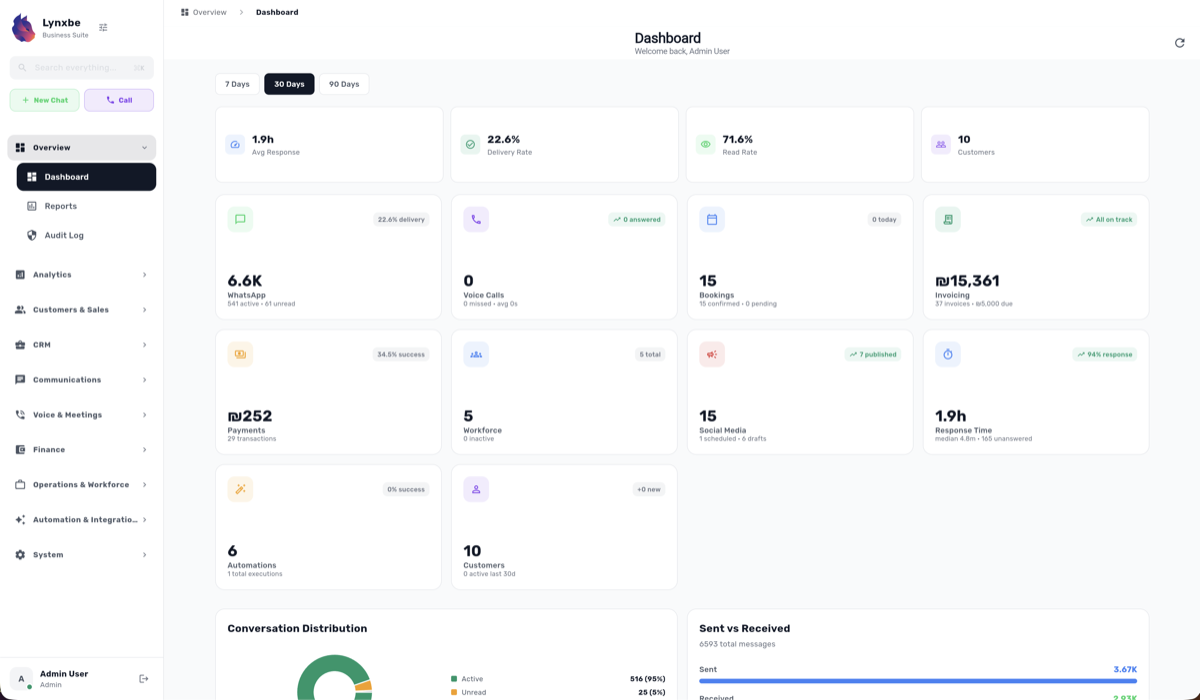
In today's competitive market, businesses in Israel often turn to CRM (Customer Relationship Management) solutions to improve their internal processes and strengthen their relationships with their customers. CRM platforms offer a wide range of functional tools, but with so many options on the market, how do you choose the platform that best fits your business needs? In this article, we will review the most popular platforms, examine their advantages and disadvantages, and help you understand which CRM solution might be the best fit for your business.
With the evolution of technology and market changes, these platforms are constantly being updated, making it important to stay informed with the latest information. We will also discuss various considerations based on the size of the business and the specific needs of each company. Remember, the right choice will not only impact your business's bottom line but also your relationships with customers, which can lead to long-term success.
As part of our discussion, we will also examine the expected changes in the market by 2026, which may influence businesses' choices in the future. Let's begin and see what each CRM solution offers and what to consider before making a decision.
Reviewing the Leading Functions of Different Platforms
Among the leading CRM platforms in the market today are Salesforce, HubSpot, Zoho, Microsoft Dynamics 365, and SugarCRM. Each of these platforms offers a wide range of functions designed to enhance customer relationship management. Salesforce, for example, is known for its advanced capabilities in marketing and sales automation, as well as in-depth data analysis. On the other hand, HubSpot offers a user-friendly interface with many free tools that can serve small and medium-sized businesses excellently.
Zoho CRM offers a very flexible package, with high customization capabilities, making it popular among various businesses. Microsoft Dynamics 365 provides a comprehensive solution that encompasses all the management needs of the business, including finance, sales, and customer service. SugarCRM, in contrast, focuses on customer relationship management and offers an open platform that allows for extensive customization.
It seems that each platform offers different advantages, so it is important to check the functions that best suit your business's specific needs. Do you need the ability to manage extensive marketing campaigns? Are you focusing on data analysis to understand your customers' behavior? All of these are important considerations that can influence your choice.
Advantages and Disadvantages of Each System
Like any technological solution, CRM platforms have their advantages and disadvantages that are important to consider. Let's start with Salesforce, which, while offering very advanced capabilities, can also be very expensive, especially for small businesses. The knowledge required for full use of the system may deter some users. HubSpot, on the other hand, offers many free options, but some advanced functions come with a cost.
Zoho CRM provides an affordable solution with great flexibility, but some advanced features may not be at the same level as the major competitors in the market. Microsoft Dynamics 365 often requires advanced technical knowledge to get the most out of the system, which can cause discomfort for non-technical users. SugarCRM is an open system that allows for extensive customization but may require significant investment in development and installation.
To make an informed decision, you should evaluate the advantages and disadvantages of each platform and experiment with free versions or demos of the different platforms. This can help you understand what works best for your needs.
Considerations Based on Business Size
The size of your business is one of the most important considerations when choosing a CRM system. Small and medium-sized businesses may find that the free or cheaper solutions are the most suitable for their needs, such as HubSpot or Zoho, which offer useful tools at an accessible price. These platforms provide a simple and easy-to-use interface, which does not overwhelm small teams.
In larger businesses, more advanced solutions like Salesforce or Microsoft Dynamics 365 may be required, which offer more complex management tools and customized requirements. These businesses typically need deeper analytical capabilities and support for complex workflows, which are better addressed by these platforms.
Additionally, it's important to think about future growth. If you plan to expand, it is advisable to choose a system that allows you to easily add additional functions and won't require replacement in the future. Investing in a system with high flexibility will help you avoid additional expenses down the line.
Changes by 2026 That Could Impact
Like any technological field, the CRM market is expected to undergo significant changes in the coming years. One of the central trends is the increasing use of artificial intelligence (AI) to streamline processes and improve customer experience. Many platforms are beginning to integrate AI capabilities, which can enable real-time data analysis, predict customer behavior, and automate marketing tasks.
Moreover, the rise in the use of mobile technologies will allow employees to access CRM systems from anywhere at any time, contributing to increased efficiency at work. At the same time, focusing on information security and protecting customer privacy will become more important, especially following laws like GDPR.
Businesses choosing CRM platforms in the coming years need to be aware of these trends and ensure that the selected platform offers solutions in the fields of artificial intelligence and information security to remain competitive in the market.
Practical Examples and Case Studies from the Tech Scene in Israel
Let's examine some practical cases of Israeli technology companies that have used different CRM systems and their impact on the business. Wix, for example, uses Salesforce to manage its customer relationships, leading to streamlined sales and customer management processes. With Salesforce's advanced tools, the company has been able to analyze customer data in depth and provide personalized services.
On the other hand, Monday.com, located in Israel, chose Zoho CRM as a solution for customer relationship management. The company reports significant improvement in workflow, with Zoho's user-friendly interface allowing employees to easily and quickly access the required information, strengthening relationships with customers.
Another company worth mentioning is Fiverr, which used the HubSpot system as a solution for marketing and sales management. The platform enabled the company to optimize its marketing campaigns and increase customer engagement, leading to significant revenue growth.
These cases illustrate how the right choice of CRM system can directly impact business success and what functions may be necessary depending on the specific needs of each company.
Best Practices and Tips
When choosing a CRM system, there are several tips that can help you make the right choice. First, conduct a thorough review of your business's needs. What are the critical functions you require? Do you need automation, data analysis, or project management?
Second, consider experimenting with free versions or demos of the different platforms. This will allow you to get a feel for the interface and determine whether it is user-friendly for your team. Don't hesitate to consult with experts in the field to get an objective opinion.
Finally, it is important to train your team to ensure that the system is utilized to its fullest potential. Investing in training will help minimize errors and improve the user experience with the system.
Final Insights
Choosing a CRM system is an important task that will affect your business's success. You should consider the required functions, the advantages and disadvantages of each platform, and your business size. It is also important to pay attention to future trends in the market and ensure that the platform you choose will be flexible and advanced.
Additionally, remember that investing in a CRM system will not only improve your workflow processes but also help you build better relationships with your customers. It is a tool that becomes a cornerstone for success in the digital age.
Summary and Call to Action
In conclusion, every business must find the CRM system that suits it. With so many options on the market, it is important to conduct thorough research and experiment with different platforms to understand what fits the specific needs of your business. Do not hesitate to reach out to experts in the field


Comments
💬 Share your thoughts