Comparison Between CRM Platforms: Which One is Right for Your Business?
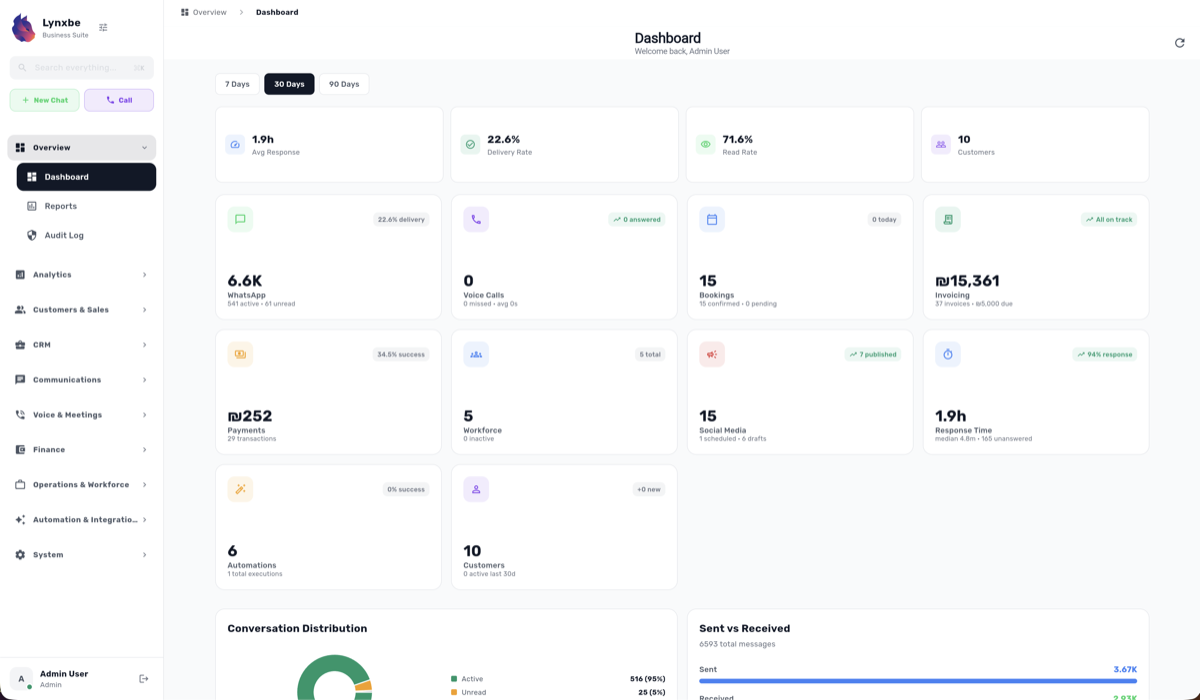
In today's digital age, CRM (Customer Relationship Management) platforms have become an integral part of businesses of all sizes. With these platforms, companies can manage relationships with customers efficiently, streamline processes, and improve service. But with so many options on the market, how do you choose the platform that is best suited for your business?
In this article, we will compare the leading platforms in Israel, examine the advantages and disadvantages of each, and provide recommendations on what to check before purchasing a CRM system. We will also discuss critical features for small and medium-sized businesses and provide practical examples of using different platforms.
If you are a startup founder, CTO, or any technology professional, this article is specifically for you. This way, you can understand which CRM platform can provide the ideal solution for improving processes in your business.
Advantages and Disadvantages of the Leading Platforms in Israel
In Israel, there are several popular CRM platforms, each with its own advantages and disadvantages. We will review several prominent platforms such as Salesforce, HubSpot, Zoho, and Pipedrive, and see what each one offers.
Salesforce is one of the leading platforms in the world, and in Israel, it is very popular among large companies. Its major advantage is the wide range of features it offers, such as sales automation, advanced data analytics, and customer service. However, the downside is its high price, which can be a barrier for small businesses.
HubSpot, on the other hand, offers a free model with options for paid upgrades. Its significant advantage is the usability and ease with which you can start working with it. It provides tools for customer management, marketing, and automation, but the limitations of the free platform may deter businesses that want to use advanced features.
Zoho is another platform that offers a comprehensive solution with a wide range of tools. Its downside is that the interface can be somewhat complicated for new users, but the advantage is that its price is very competitive.
Pipedrive focuses primarily on managing sales processes. It offers a simple and intuitive interface, but it lacks some of the advanced features that certain businesses may require.
What to Check Before Purchasing a CRM
Before you decide on a CRM platform, there are several factors that are important to consider. First, you need to understand the specific needs of your business. Do you need a platform that can manage sales and customer service in one place? Or would you prefer to focus primarily on marketing processes?
Second, it is important to check the cost of the platform. Are there additional costs such as add-ons or integrations that could drive up the price? A clear pricing plan will help you avoid unwanted surprises later on.
Third, it is important to check the customer support of the platform. Is technical support available? Are there guides and resources that can help you adapt to using the system? Good support can save you time and money in the long run.
Finally, it is important to check the integration capabilities of the platform with other tools you are using in your business. Is there an option to integrate the CRM with other management systems like ERP or marketing platforms? These integrations can enhance the efficiency of your work.
Critical Features for Small and Medium-Sized Businesses
When it comes to small and medium-sized businesses, there are several critical features that should be present in a CRM system. First, the system should be easy to use and not require extensive training. An intuitive user interface can save a lot of time and improve the user experience.
Second, the system should include automation capabilities such as automated email sending, lead management, and advanced analytics. Automation can improve efficiency and save manual labor.
Another important feature is mobile accessibility. In today's era, many employees work remotely, so it is important that the system allows access from anywhere at any time.
Finally, the system should include options for reporting and data analysis. These capabilities allow tracking performance and making continuous improvements.
Practical Cases of Using Different Platforms
To better understand the advantages of different CRM platforms, we will present several practical cases from Israeli technology companies. One of them is a company called "Softo," which specializes in information management systems. They chose Salesforce to manage their customer relationships and sales processes.
Using Salesforce, Softo was able to improve its sales processes through automation. For example, every lead enters the system, and the system automatically sends an email to the sales manager with the lead's details. This improved the speed of response to customers.
Another case is the company "Golan Telecom," which chose HubSpot. The system allowed them to build paid marketing campaigns and manage the entire process from lead generation to deal closure. HubSpot enabled them to analyze the performance of each campaign in real time and make quick adjustments.
Additionally, the company "Fitness Coaching" chose Zoho for customer relationship management. The system allowed them to manage all customer schedules, send automatic reminders for appointments, and conduct analyses on the performance of each coach. This way, they were able to improve service and increase customer retention rates.
Recommendations for Advanced Automation Solutions
Today, automation is an essential tool in business. There are several advanced solutions that can enhance the efficiency of your CRM system. For example, Zapier is a tool that allows connecting multiple different platforms. It enables data transfer between the CRM and other systems, such as marketing and email platforms.
Additionally, a solution like Integromat (now Make) offers advanced automation with many integration options. With these tools, you can save time and automate many processes in your business.
Moreover, consider solutions like ActiveCampaign or Mailchimp that can enhance your marketing campaigns by automating personalized email sending.
Conclusions and Tips
In conclusion, choosing the right CRM platform for your business is a task that requires a deep understanding of your needs and the options available on the market. Taking the time to examine the advantages and disadvantages of each platform can save you money and time in the long run.
It is advisable to start by analyzing your needs, checking the costs, and ensuring that the system is compatible with the tools and technologies you already have in your business. Don't forget to check the support and additional services that the CRM platform offers.
Finally, investing in automation and advanced tools can enhance the efficiency of your business. In an era of increasing competition, automation is not just an advantage; it is a necessity.
If you are ready to start your journey toward an advanced CRM system, do not hesitate to contact us at the following link, and we will be at your service for any questions or requests.

Comments
💬 Share your thoughts