Introducing Automated Tools to Your Business: A Complete Guide for SMBs
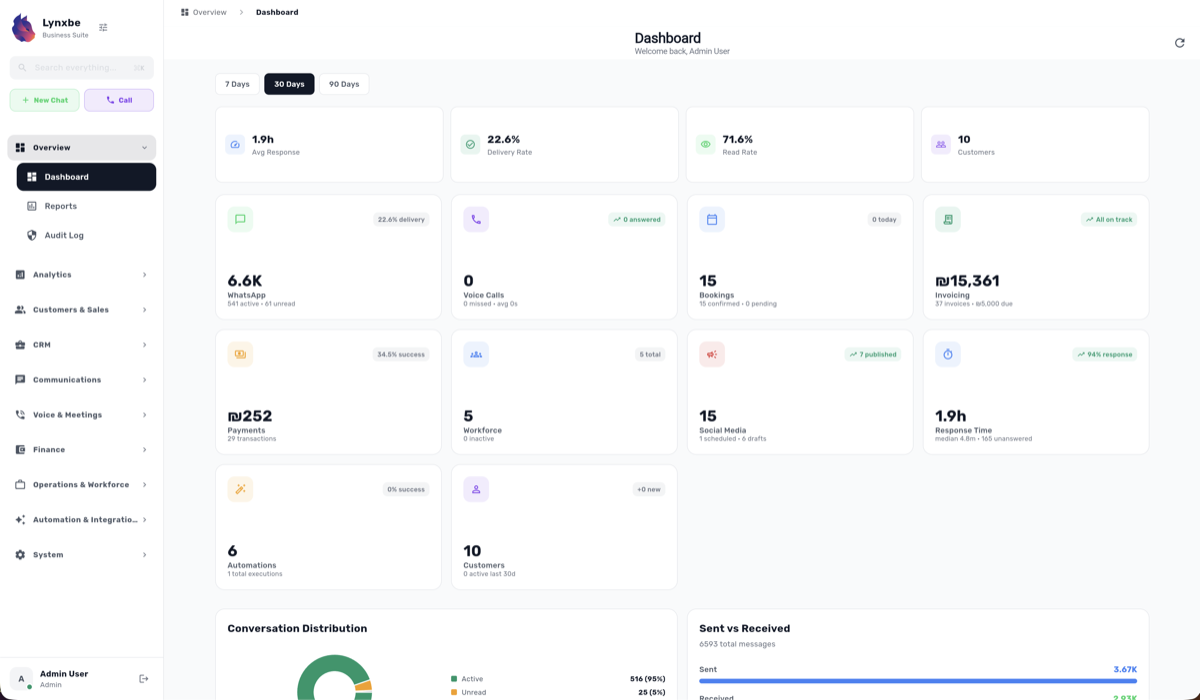
In the current digital age, businesses must adapt to rapid market changes to remain competitive. Automating business processes has become one of the most effective ways to achieve this. Whether you run a small business or a startup, implementing automation tools can enhance your team's effectiveness and save you time and resources.
But what does it really mean to transition to automation? How can you integrate automated tools into your business? In this article, we will review the benefits of automation in business processes, present popular tools in the Israeli market, detail the steps for implementing automation, and provide examples from Israel.
The main advantage of automation is time savings. Routine tasks like sending emails, managing schedules, or analyzing data can be done automatically, allowing your team to focus on more strategic tasks. Additionally, automation reduces the likelihood of human errors, which can be critical in business.
To understand the potential of automation, let's dive deeper into its main benefits.
Benefits of Automation in Business Processes
Automating business processes offers several significant advantages. First, it allows businesses to save a lot of time. For example, instead of the sales team spending hours sending quotes to potential customers, an automated system can be set up to send this information at the push of a button.
Second, automation helps improve employee productivity. When some tasks are performed automatically, employees can focus on more strategic tasks that yield better results. Additionally, automation can enhance the customer experience by providing quicker responses to questions or issues.
Another advantage is the ability to monitor performance in real-time. With automated tools, you can receive data and statistics about business performance quickly and accurately. This allows for smarter business management and the ability to respond to market changes in real-time.
Finally, automation enables businesses to adapt to the changing needs of the market. In today's competitive environment, the ability to respond quickly to changes can be the difference between success and failure.
Popular Automation Tools in the Israeli Market
Today, there are many tools designed for automating business processes, each offering different solutions. One of the most popular tools is Zapier, which allows connecting different applications and transferring data between them automatically. For example, you can set up Zapier so that when a new customer is added to the Mailchimp mailing list, their information is automatically transferred to an Excel spreadsheet.
Another tool is Integromat (now Make), which offers similar functions but with a more user-friendly interface. With Integromat, you can set up more complex processes, such as sending alerts to project managers when there is a change in project status.
In Israel, there are also local tools like "Automation 360" and "Auto-Agenda," aimed at small and medium businesses. These tools offer customized solutions and include support in Hebrew.
Other useful tools include HubSpot and Salesforce, which offer automated solutions for customer management and marketing. With HubSpot, you can automate the marketing and customer referral process intelligently.
Steps to Implement Automation in Your Business
To introduce automation into your business, there are several steps you need to take. The first step is identifying the processes that require automation. This could be processes like customer management, data analysis, email sending, or even task management.
After identifying the processes, the next step is to choose the appropriate tools. Conduct thorough research on the tools available in the market and ensure that the tools you choose fit your needs. It is important to select tools that are easy to integrate with your existing systems.
Next, you need to set up the tools and perform the necessary configurations. This includes creating automated processes, setting triggers and paths, and preparing reports that will allow you to monitor performance.
Once the tools are set up, the next step is to train your team. It is important to ensure that employees understand how to use the new tools, so workshops and training sessions should be conducted. Any training will help ease the transition to automation.
Case Study Examples from Israel
For example, take "Oracle Israel," which used automation to upgrade its sales processes. They implemented an automation tool that allows them to analyze the performance of sales representatives in real-time, enabling them to respond quickly to any changes or issues.
Another example is "Wix," which offers a website building platform. They used automation to streamline their customer support processes. Instead of manually sending emails to each customer, they created an automated system that provides answers to frequently asked questions and directs customers to appropriate guides.
A startup called "Lightricks" also utilized automation to enhance their marketing process. With automated tools, they managed to optimize the process of reaching out to new customers and increase engagement with existing users.
Finally, "Tapuz Networks" developed an automated content management system. The system allows them to upload new content to the website automatically, saving time and performing the work more professionally.
Best Practices and Tips
To succeed in implementing automation in your business, there are several tips that can help. First, it is important to start small. Instead of trying to automate all processes at once, it is advisable to start with one or two processes and see how they perform.
Second, regularly check the results. It is important to understand which processes are working well and which are not, in order to make continuous improvements. Data analysis can help understand the performance of automation and make enhancements.
Finally, do not forget to involve the team in the process. It is important that employees feel they are part of the change and understand the benefits of automation. This can increase team engagement and commitment.
Actionable Insights and Takeaways
In conclusion, implementing automation tools in your business is a necessary step in the current digital age. Automation can save time, improve productivity, and enhance the efficiency of business processes.
To succeed in the transition to automation, it is important to identify the processes that require automation, choose the appropriate tools, successfully set up the tools, and train the team. With examples from Israeli case studies, one can see how automation can upgrade processes in business.
If you are interested in entering the world of automation, do not hesitate to reach out to experts in the field. There are many companies in Israel that offer professional services in this area, and they can guide you through the process.
Summary
Automation is not just a temporary trend, but an integral part of the future of every business. Today, businesses that do not adopt new tools risk falling behind. Investing in automation is an investment in the future of your business. Don't wait — start today!





Comments
💬 Share your thoughts