Comparing CRM Solutions: What is Right for Your Israeli Business?

The world of CRM (Customer Relationship Management) software has become a cornerstone for businesses of all sizes. In an era where information flows at high speed, tools that assist in managing customer relationships, automating processes, and enhancing customer experience are critical for success. For Israeli businesses, choosing the right CRM solution can determine the organization's success or failure.
In Israel, the cultural and economic uniqueness requires a different approach to customer relationship management. Israeli businesses need solutions tailored to local needs, both technologically and legally. In this article, we will compare different CRM solutions, examine the advantages and disadvantages of each, and present practical tips for making the right choice.
Additionally, we will address the legal aspects and local requirements that are important to consider, provide real-world examples, and offer tips for selecting the most suitable CRM solution for your business. All this aims to help you propel your business forward with the right tools.
Advantages and Disadvantages of Common Solutions
The CRM market offers a wide variety of solutions, each with its own advantages and disadvantages. We will start with popular solutions like Salesforce, HubSpot, and Zoho CRM. Each of these solutions offers different features that can suit businesses of various sizes.
Salesforce, for example, is one of the leading solutions in the market. Its main advantage is the ability to offer highly customized solutions, with numerous integrations to external tools. Salesforce provides an integrated sales management system, advanced data analytics, and process automation. However, its disadvantage is the high subscription cost, which can be a problem for small and medium-sized businesses.
HubSpot CRM, on the other hand, offers a free solution that can be suitable for small businesses just starting out. The advantage is its user-friendly interface and ease of use. HubSpot combines customer management with marketing, allowing businesses to manage all processes in one place. However, when it comes to growth, the more advanced features may be limited and not meet the needs of larger businesses.
Zoho CRM is another solution worth considering. It offers a wide range of features at a relatively low price. Its advantage is the flexibility and high level of customization it offers, allowing businesses to build a system that fits their precise needs. The downside is that sometimes the user experience may be less intuitive compared to other solutions.
Legal Requirements and Local Aspects
When your business is located in Israel, there are legal aspects and local requirements that are important to consider when choosing a CRM solution. These aspects include the Privacy Protection Law, which requires businesses to protect their customers' personal information. Additionally, one must consider the specific requirements of the Israeli central data that mandates the registration and protection of personal information.
When evaluating a CRM solution, ensure that the system supports the protections required by law. This includes options for data security, access management, and reporting on security breaches. For example, there are CRM solutions that offer data encryption, permission management, and different access levels for users, which can facilitate compliance with legal requirements.
Furthermore, consider the system's proficiency in the Hebrew language. Solutions that offer a user interface in Hebrew can ease the use of the system, especially for teams that do not speak English fluently. This is a significant advantage that can enhance the user experience and reduce the training time required.
Tips for Choosing CRM by Business Type
Choosing the right CRM system largely depends on your business type and specific needs. Small businesses may prefer simple and inexpensive solutions, while larger businesses need more advanced systems with complex features. Before making a decision, it's advisable to analyze your business needs in depth.
Service-oriented businesses, for example, need a CRM solution that can manage projects, track customers, and support communication with clients. Solutions like Zoho CRM or Salesforce, with tools for project management and process automation, can be very suitable. In contrast, businesses in retail may need a system that can manage inventory, sales, and market analytics.
Also, it's important to check if the solution offers integrations with other tools you are using. For example, if you work with a project management system like Trello or Asana, make sure your CRM can connect to them easily. These integrations can save time and improve efficiency in your business.
Possible Integrations with Other Tools
One of the main advantages of CRM solutions is their ability to integrate with a wide range of other tools, enabling automation and process improvement. Integrations with tools like Mailchimp, Slack, or Google Analytics can enhance the user experience in the system and streamline workflows.
For example, if you use Mailchimp for sending newsletters, integration with your CRM will allow you to manage distribution lists seamlessly, analyze responses, and improve your marketing capabilities. Additional integrations like Zapier allow connections between dozens of applications, which can facilitate automated processes and save time.
Moreover, integrations with financial management systems like QuickBooks or Xero can improve your business's financial management. This way, you can track sales, generate financial reports, and gain insights into your business's financial status.
Practical Cases from the Israeli World
Now, let’s examine several practical cases from the Israeli technology world that can illustrate the impact of CRM solutions on business success. A prominent example is Wix, which uses CRM solutions to manage their relationships with customers in the most advanced way. Their system allows them to collect data on users, analyze behaviors, and automate marketing processes.
Monday.com, which specializes in project management, uses CRM solutions to enhance its ability to manage customers and projects efficiently. They offer their clients a user-friendly interface that allows them to manage all actions in one place. This is an excellent example of how CRM solutions can elevate the customer experience.
Additionally, Cellcom, one of the largest communication providers in Israel, adopted a CRM solution to streamline its customer service processes. By using the system, they are able to analyze data in real-time, prioritize high-priority inquiries, and improve response times.
Smaller businesses, such as startups in the food sector, can greatly benefit from using CRM systems like HubSpot. For example, a Tel Aviv startup called "Pizza Fan" uses HubSpot to manage their customer relationships, send personalized promotions, and analyze responses to improve their products and services.
Best Practices and Tips
When selecting a CRM solution, it is important not only to choose the right system but also to follow best practices. One of them is to conduct comprehensive training for the teams working with the system. Investing in training will help teams understand the offered tools and utilize the system optimally.
Additionally, it is advisable to maintain a regular process of updating and maintaining the information in the system. Old or inaccurate data can lead to wrong decisions and harm the customer experience. Be sure to conduct periodic checks of the information stored in the system and ensure it is up-to-date.
No less important, make sure to maintain contact with your CRM solution provider. Reaching out to the provider for support or help regarding new features can enhance the user experience and bring your business into the digital age in the best possible way.
Practical Insights and Conclusions
In conclusion, the process of choosing a CRM solution is not simple, but it is critical for your business's success. Investing in a suitable CRM system can enhance the customer experience, streamline internal processes, and improve the data and analytics at your disposal. It is important to thoroughly analyze your needs and tailor the solution to your business.
Remember to consider the legal aspects and local requirements, and ensure that the system you choose supports the necessary processes. Also, integrations with other tools can enhance the use of the system and streamline work.
Ultimately, your success depends on your ability to choose the right solution and use it optimally. Investing in CRM is an investment in the future, and its impact will be felt across all areas of your business.
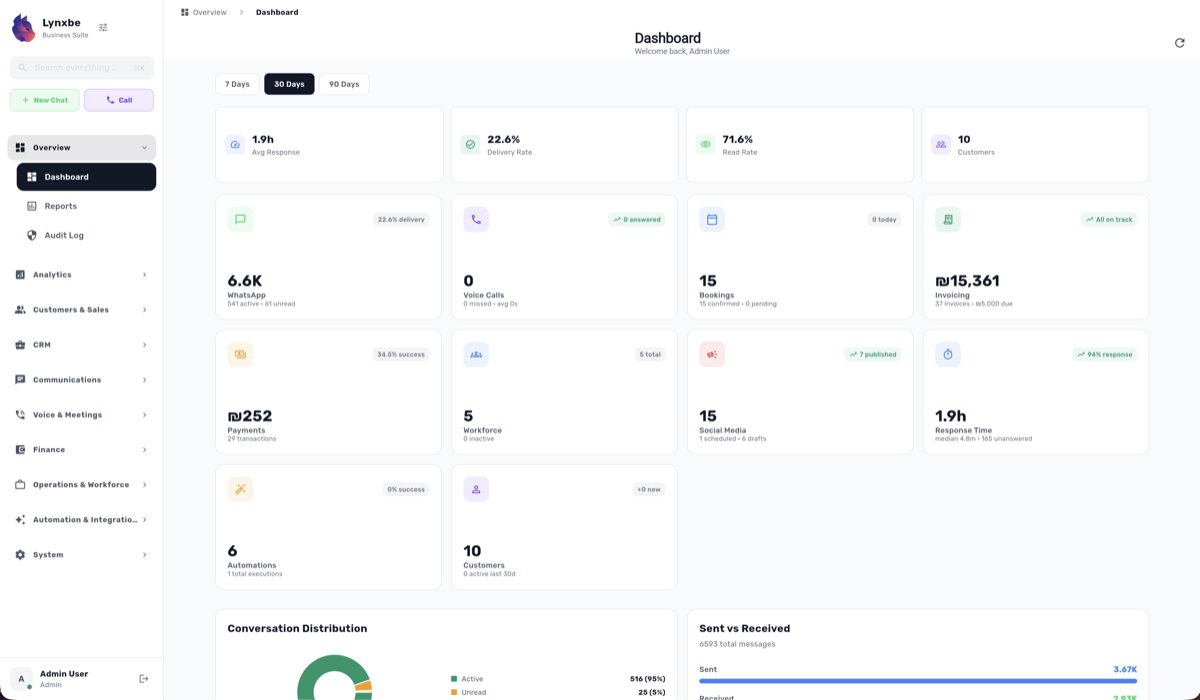
If you are interested in additional CRM solutions or need help choosing the right system for your business, do not hesitate to reach out to us at Lynxbe. We are here to help you propel your business forward!


Comments
💬 Share your thoughts