Guide: Connecting WhatsApp Business API to Your Business
Guide: Connecting WhatsApp Business API to Your Business
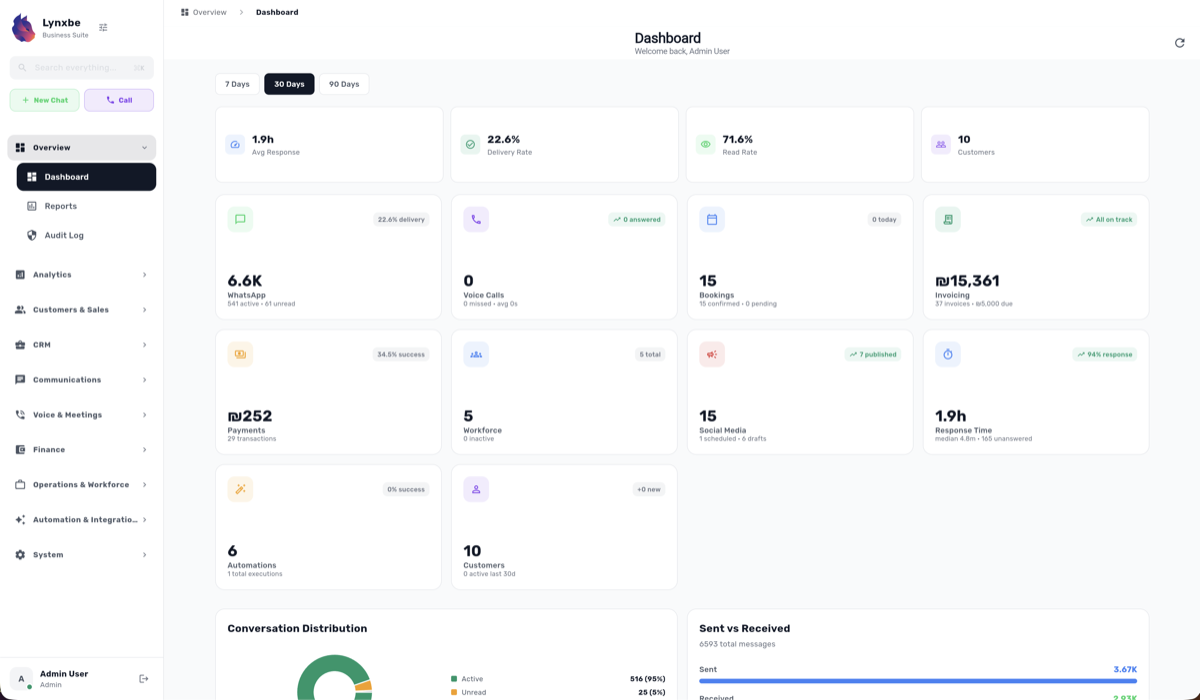
In today's digital age, fast and efficient communication with customers is essential for any business, especially in light of the increasing competition in the market. The WhatsApp Business API offers an excellent solution for businesses looking to improve their services and create an outstanding customer experience. In this article, we will learn how to connect the WhatsApp Business API to your business, examine tips for managing customer conversations, understand how to use automation to enhance service, and see how to measure the success of using the application.
Connecting to the WhatsApp Business API not only helps improve communication with customers but also offers advanced analytical tools that allow for a more accurate understanding of customer needs. In an era where customers expect quick responses and personalized service, the WhatsApp API enables businesses to meet these needs efficiently. Throughout the article, we will guide you step by step through the installation process, provide tips for managing conversations, and present practical examples that can upgrade your service.
We will start our journey with the installation of the WhatsApp Business API, learn about its various stages, examine tips for managing conversations with customers, and see how to leverage the advanced tools that the platform offers to gain a competitive edge in the market. Let's dive into the process.
Step by Step Installation of WhatsApp Business API
The first step in installing the WhatsApp Business API is registering your business with WhatsApp Business. This is an important process where you will need to provide information about your business, such as the business name, phone number, and website address, if you have one. Note that the number you register must be a phone number that has not previously been used on WhatsApp.
Next, you will need to choose an API service provider. There are several providers in the market, such as Twilio, MessageBird, and 360dialog, offering different solutions and diverse capabilities. It is important to choose a provider that fits your business needs and offers good technical support.
Once you have chosen a provider, you will need to register with them and perform the necessary settings. This includes setting connection details, configuring authentication, and setting up the Webhook that will allow you to receive updates from the service.
In the next step, you will need to configure your system to send and receive messages. This includes performing tests to ensure everything is working properly. You can use the following code as an example to send an initial message:
import requests

url = "https://api.yourprovider.com/v1/messages"
headers = {
    "Authorization": "Bearer YOUR_ACCESS_TOKEN",
    "Content-Type": "application/json"
}

data = {
    "to": "RECIPIENT_PHONE_NUMBER",
    "type": "text",
    "text": {
        "body": "Hello, this is a message from your business!"
    }
}

response = requests.post(url, headers=headers, json=data)

if response.status_code == 200:
    print("Message sent successfully!")
else:
    print("Error sending message:", response.text)
After the message is sent successfully, you are ready to start communicating with your customers via WhatsApp. Remember that it is important to adhere to the usage rules of the WhatsApp Business API to avoid blocks or other issues.
Tips for Efficiently Managing Conversations with Customers
Managing conversations with customers through the WhatsApp Business API can be challenging, but there are several tips that can help you streamline the process. First, it is important to establish a quick response protocol. Customers expect fast answers, so it is advisable to set fixed response times.
Second, it is recommended to use prepared responses for frequently asked questions. This is an excellent tool for saving time and improving efficiency. You should understand what questions your customers frequently ask and create prepared responses in advance. For example, if customers ask about opening hours or product availability, you can create automated responses that provide the necessary information.
Third, it is advisable to maintain a consistent tone in conversations. It is important to keep a professional and pleasant tone, even when dealing with dissatisfied customers. Your response can change the customer experience, so it is worth investing in the right tone.
Finally, it is a good idea to track your conversations. Through reports and insights, you can understand what issues are most common and what topics are important to your customers. This can help you improve your services in the future.
Using Automation to Enhance Customer Service
Automation is a powerful tool that can significantly upgrade your service. With the WhatsApp Business API, you can set up chatbots that can handle common inquiries and free your team to focus on more complex tasks. Chatbots can provide answers to frequently asked questions, assist in the purchasing process, or even schedule appointments.
To set up a chatbot, you will need to use the appropriate libraries and frameworks. For example, you can use Dialogflow or Rasa to develop intelligent chatbots. This is a process that requires comprehensive planning, including defining the scripts and interactions you want the bot to perform.
An example of a simple chatbot code in Python might look like this:
from flask import Flask, request
import requests

app = Flask(__name__)

@app.route('/webhook', methods=['POST'])
def webhook():
    data = request.json
    if data['messages'][0]['text']['body'].lower() == 'what are your hours?':
        reply = "Our business hours are from 9:00 AM to 5:00 PM, Mon-Fri."
        send_message(data['messages'][0]['from'], reply)
    return '', 200

def send_message(to, message):
    url = "https://api.yourprovider.com/v1/messages"
    headers = {
        "Authorization": "Bearer YOUR_ACCESS_TOKEN",
        "Content-Type": "application/json"
    }
    data = {
        "to": to,
        "type": "text",
        "text": {
            "body": message
        }
    }
    requests.post(url, headers=headers, json=data)

if __name__ == '__main__':
    app.run(port=5000)
With chatbots, you can ensure that customers receive quick responses and improve the overall customer experience. This way, you can also optimize your team's resources and focus service efforts on more complex cases.
How to Measure the Success of Using the Application
Once the connection to the WhatsApp Business API is complete, it is important to measure the success of using the application to understand its impact on your business. There are several key metrics that can serve as a basis for evaluation.
First, it is advisable to track response times to inquiries. Are customers receiving answers quickly? This measurement can help you understand whether there is a need for improvements in workflows or the addition of automation.
Second, you can track the number of inquiries received each day. If you see an increase in the number of inquiries, it is a sign that customers appreciate the ability to communicate with your business via WhatsApp.
Additionally, it is a good idea to conduct surveys with customers to get feedback on their user experience. This is an effective tool that can provide you with direct insights from customers and assist in improving your service.
Practical Examples from the Israeli Market
In Israel, several startups and businesses have already begun to leverage the WhatsApp Business API to enhance their services. For example, an e-commerce company can use the API to send updates on order status to customers. Instead of sending emails, customers receive a direct message on WhatsApp, providing them with an improved user experience.
Another example is a technology lab offering technical support via WhatsApp. By using chatbots designed for frequently asked questions, they manage to provide quick answers to customers while freeing the team from responding to simple inquiries.
Additionally, companies like "MasterCard" provide financial services and have used WhatsApp to improve communication with their clients. They use the API to send updates on transactions or to ask customers if they have any further questions.
The wide variety of uses for the WhatsApp Business API indicates the significant potential the platform offers to businesses of all sizes
Comments
💬 Share your thoughts