Upgrade your business with WhatsApp Business API
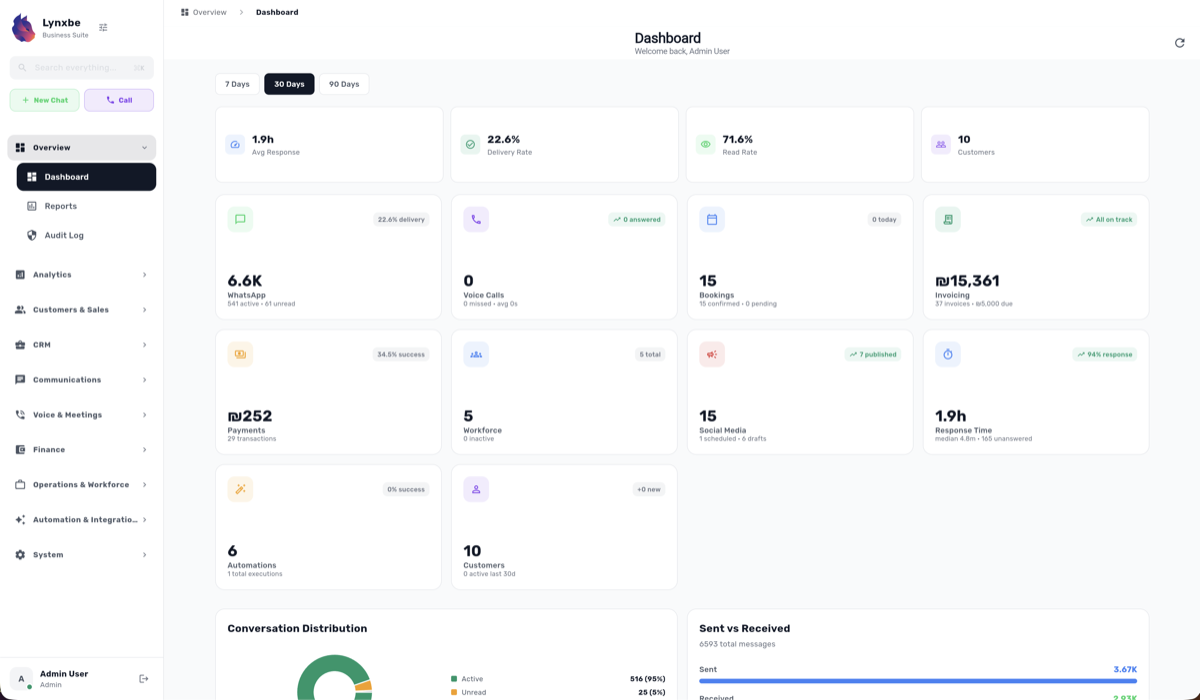
In the digital age we live in, communication with customers has become more important than ever. Small and medium-sized businesses are looking for ways to improve their relationships with customers and provide services quickly and efficiently. The WhatsApp Business API offers advanced solutions that allow them to do this easily and effectively. This article will explore how you can upgrade your business using the WhatsApp Business API and how to implement these tools to enhance the customer experience.
The WhatsApp Business API serves as a platform that enables businesses to communicate with their customers intelligently. With this API, you can send and receive messages, manage conversations with customers, and perform various automations that simplify the process. Businesses can leverage the power of WhatsApp to offer technical support, send order updates, and conduct marketing actions. The ability to communicate directly with customers on the platform they already use makes the WhatsApp Business API an indispensable tool.
In this article, we will examine the benefits of using the WhatsApp Business API, how to integrate it with a CRM system, the use of automations to improve communication with customers, and principles for creating a personalized customer experience. If you run a small or medium-sized business and are looking for ways to enhance your relationships with your customers, this article is for you.
Benefits of Using WhatsApp Business API for Small Businesses
One of the main advantages of the WhatsApp Business API is the ability to communicate with customers directly and quickly. Unlike emails that can get stuck in the inbox, WhatsApp messages arrive instantly. Customers expect a quick response, and this platform allows you to provide what they want within seconds. This is a significant advantage in an era where customers want immediate service.
Another advantage is the ability to manage conversations with customers across multiple channels. With the WhatsApp Business API, you can manage voice calls, send text messages, images, videos, and of course documents. This adds value to the business, as it allows products to be showcased visually and information to be provided in an accessible and convenient manner.
Additionally, the WhatsApp Business API allows businesses to manage conversations in an organized manner. With tools like chatbots, you can answer frequently asked questions, provide information about operating hours and branches, and help customers find the information they are looking for. This reduces the burden on customer service teams and allows them to focus on more complex conversations.
How to Integrate the API with a CRM System
To integrate the WhatsApp Business API with a CRM system, a deep understanding of both tools is necessary. In the first step, ensure that your system supports the use of the API. Today, most leading CRM systems on the market offer integration solutions with WhatsApp.
Next, you need to set up a WhatsApp Business API account. It is important to note that setting up this account can be a more complex process than opening a regular WhatsApp account. Business verification is required, and you may need to apply for a unique phone number.
Once your account is set up, you can start developing an interface between the API and the CRM system. For example, you can use the Python programming language to build a simple script that performs the connection to the API. An example of such a script would be:
import requests

# Define the API address
api_url = "https://api.whatsapp.com/v1/messages"

# Define the information we want to send
data = {
    "to": "customer's phone number",
    "type": "text",
    "text": {
        "body": "Welcome message to your business!"
    }
}

# Send the message
response = requests.post(api_url, json=data)

# Check the status of the message
if response.status_code == 200:
    print("Message sent successfully!")
else:
    print("Error sending message:", response.text)
In the above script, we send a basic message to the customer. These functions can be expanded to include integration with data from your CRM, such as customer names, purchase history, and more.
Using Automations to Improve Communication with Customers
Automations are a particularly powerful tool when using the WhatsApp Business API. With automations, businesses can reduce the burden on service teams and enhance the customer experience. For example, you can set up automations that respond to incoming messages during non-working hours.
Additionally, automations can be used to send welcome messages or updates about orders. For instance, businesses can send a confirmation message to the customer after a purchase, or a reminder message about the delivery date. These messages create a positive customer experience and reduce the number of calls that service teams need to handle.
To implement such an automation, you can use external tools like Zapier or Integromat. These tools allow you to connect the WhatsApp Business API with other systems in a simple and user-friendly manner. With these tools, you can set up automated processes that will trigger when a new message is received.
Principles for Creating a Personalized Customer Experience
To create a personalized customer experience, it is essential to understand your customers' needs and expectations. First, gather data about customers using your CRM system. Information about previous purchases, personal preferences, and communication history can help you understand how to tailor your messages to each customer.
Second, use this data to create tailored content. For example, if a customer purchased a specific product, you can send them recommendations for similar products or discounts on additional items. Personalized communication creates a positive customer experience and leads to higher conversion rates.
Finally, it is important to maintain open communication with customers. Questions like "How can I assist you today?" or "Did you enjoy our product?" can provide valuable insights into customer needs and help you improve your services.
Real Cases from the Israeli Tech Scene
One successful example of using the WhatsApp Business API in Israel is the company "Wolt," which provides delivery services. The company uses the API to communicate with its customers and provide real-time updates on delivery status. With WhatsApp, customers can receive messages when their delivery is on the way, and also request additional information in case of issues.
Another example is "Gett," a taxi booking service. Gett uses the WhatsApp Business API to send customers messages about their driver's location, reminders for calls, and even questions about their experience after the ride. This is a tool that simplifies communication and provides quality customer service.
Another company is "Super-Pharm," the Israeli pharmacy chain. Super-Pharm uses the WhatsApp Business API to send customers updates on promotions, new products, and health treatment recommendations. This is a powerful marketing tool that increases customer engagement.
Another example is "Ma'afari," a beauty service company. They use the WhatsApp Business API to schedule appointments with customers, send reminders, and even offer discounts on treatments. Using WhatsApp allows them to provide personalized service tailored to each customer.
Finally, "IKEA" in Israel uses the WhatsApp Business API to assist customers in the purchasing process. They send messages with product recommendations, answers to frequently asked questions, and even technical support after the purchase. Using WhatsApp increases customer satisfaction and reduces the burden on service teams.
Tips and Recommendations for Successful Use of WhatsApp Business API
To get the most out of using the WhatsApp Business API, there are several tips to consider. First, invest time in training your team. The team managing communication with customers must be skilled in using the tools and automations available.
Second, ensure a professional and consistent message design. Maintain a tone of voice that matches your brand and provide valuable content to customers. Messages with irrelevant content may deter customers.
Finally, don't forget to measure and analyze performance. Check the open rates of messages, response rates, and overall customer satisfaction. With this data, you can make improvements and optimize communication with your customers.
Insights and Recommendations for the Future
The WhatsApp Business API offers small and medium-sized businesses the opportunity to improve communication with their customers and provide higher-level services. With the tools and automations that the platform offers, you can save time and enhance the customer experience.
The ability to manage conversations in an organized manner, send personalized messages, and perform various automations is critical to success in the digital age. Investing in the WhatsApp
Comments
💬 Share your thoughts