How to use the WhatsApp Cloud API to enhance business in Israel
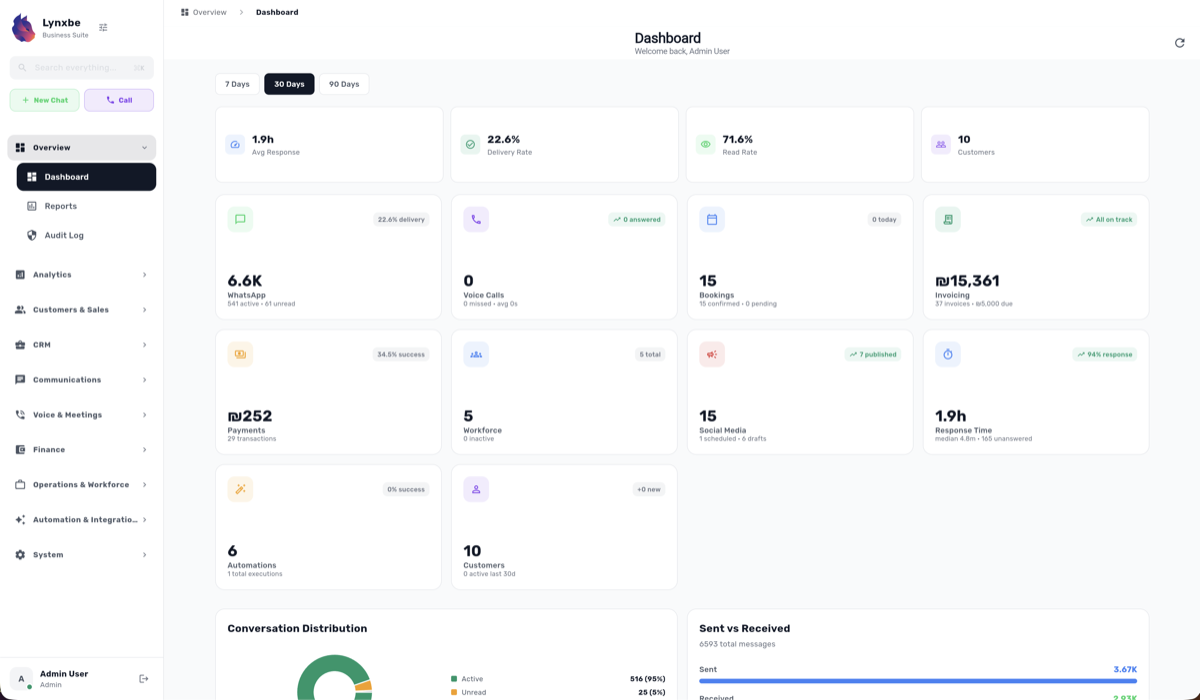
In today's digital age, fast and efficient communication between businesses and customers is critical to the success of any organization. With the advancement of technology, tools like WhatsApp have become a standard in everyday communication. However, when it comes to managing a business, it is important to understand how to optimally leverage these tools.
WhatsApp Cloud API offers businesses in Israel multiple options to enhance communication with their customers. It is a cloud-based solution that allows businesses to send and receive messages, images, files, and more, in a way that is not dependent on specific mobile devices, which helps improve the agility and flexibility of the business.
In this article, we will review the advantages of WhatsApp Cloud API, how to transition to the new service, popular uses in Israeli businesses, tips for improving customer service, practical examples, and best practices. We have a lot of important information to share, so let's get started!
One of the main advantages of WhatsApp Cloud API is the ability to enhance the customer experience. In an era where customers expect quick responses, this tool allows businesses to provide fast, personalized, and efficient service. It is a powerful tool that can upgrade the entire communication process with customers.
To start using WhatsApp Cloud API, the business needs to take a few simple steps. First, you need to register for the service through the Meta (Facebook) platform. Then, you must manage the account settings and create an application that will serve as a bridge between the customers and the business's messaging system. This process also includes obtaining a unique phone number for the service.
After that, you can start sending messages via the API. For example, if you are a marketing manager at an Israeli company, you can send promotional updates to customers or manage customer relations through automated messages. This allows you to communicate with your target audience directly and effectively.
Popular uses of WhatsApp Cloud API include technical support, order updates, appointment confirmations, and sending reminders. Retail businesses can, for example, send personal messages to customers about new promotions or products that have arrived in stores.
Our experience with Israeli clients shows that using WhatsApp Cloud API can give you an edge over competitors in the market. For example, the startup "CoFix" used the API to enhance its customer experience. Through instant messaging, they were able to respond to customers faster and reduce the load on the support team.
Moreover, technologies like artificial intelligence can be integrated into this service, allowing bots to respond to messages automatically. This way, businesses can provide 24/7 service without overloading human teams.
Let's look at a practical code example that demonstrates how to send a message using WhatsApp Cloud API. This code requires access to API keys that can be obtained during setup:
import requests

url = "https://graph.facebook.com/v13.0/your-phone-number-id/messages"
payload = {
    "messaging_product": "whatsapp",
    "to": "recipient-phone-number",
    "text": {"body": "Test message from WhatsApp Cloud API"}
}
headers = {
    "Authorization": "Bearer your-access-token",
    "Content-Type": "application/json"
}

response = requests.post(url, json=payload, headers=headers)

if response.status_code == 200:
    print("Message sent successfully!")
else:
    print("Error sending message:", response.json())
In this example, we define the API URL, the content of the message, and the request headers. Then, we send the request and check whether the message was sent successfully. This is a simple yet powerful process that can upgrade communication with customers.
We will continue to examine additional practical cases from the Israeli business world. The company "Wolt," which offers delivery services, uses WhatsApp Cloud API to send real-time updates to customers regarding their order status. Through this service, customers can know exactly when their delivery will arrive, which strengthens the sense of trust.
Additionally, we can see the company "Pizza Hut" that used WhatsApp Cloud API to upgrade its customer service. Customers can send messages directly to the service center to get answers to frequently asked questions, order pizzas, or make changes to existing orders.
To succeed in using WhatsApp Cloud API, a number of best practices should be implemented. First, it is important to ensure quick response times, as customers expect immediate replies. Second, it is advisable to use friendly and personal language to strengthen the connection with customers.
Additional tips include using pre-prepared message templates so that quick responses can be sent to common questions. Managing paid campaigns through WhatsApp can also provide a significant advantage. It is important to track results to improve marketing strategies.
In conclusion, using WhatsApp Cloud API can significantly upgrade your business. You can enhance the customer experience, increase the efficiency of the support team, and create closer relationships with your customers. It is a tool that makes communication more convenient, fast, and effective.
If you are managing a business in Israel and want to improve communication with customers, we recommend starting to explore the options that WhatsApp Cloud API offers. Now is the time to drive your business forward, experience the benefits of advanced technology, and create unique experiences for your customers.



Comments
💬 Share your thoughts