What's new in the WhatsApp Business API interface in Israel 2026?

In recent years, the WhatsApp Business API has become a central tool for businesses in Israel and around the world. With the rapid development of technology and market demands, WhatsApp is introducing significant changes to its API interface. In 2026, we are witnessing impressive upgrades aimed at enhancing customer experience and streamlining communication between businesses and their clients. In this article, we will review the main changes in the WhatsApp Business API interface, their impact on businesses, tips for implementing the changes, practical use cases, and integration with additional tools like CRM and automation.
The new features of the WhatsApp Business API not only upgrade existing functions but also open new possibilities for both small and large businesses. These upgrades focus on better customer management, process automation, and executing smarter interactions. For example, the addition of advanced chatbot capabilities allows businesses to provide customer service 24/7 without the need for constant human presence.
Additionally, the changes in the interface also include improvements in data analysis, enabling businesses to better understand their customers' behavior and make adjustments accordingly. With new capabilities such as conversation data analysis and trend identification, businesses can now target their marketing efforts more accurately. In this article, we will delve into each of these changes and examine their impact on the Israeli market.
Furthermore, we will present practical tips for implementing the changes within organizations, discuss practical use cases for businesses in Israel, and explore how to integrate the WhatsApp Business API with additional tools like CRM and automation to enhance business performance.
Overview of the Main Changes in the Interface
The updates to the WhatsApp Business API interface in Israel in 2026 include several key improvements. One of the most notable changes is the ability to send personalized messages to customers based on their previous behavior. For example, if a customer has left a shopping cart on a website, a reminder message can be sent with a discount on the product they are considering purchasing. This is a significant change that allows businesses to increase customer engagement and improve sales closure rates.
Another change is the ability to use advanced chatbots with machine learning capabilities. This enables businesses not only to answer basic questions but also to understand customers' intentions and provide personalized responses. For example, a chatbot can identify if a customer is looking for information about a specific product and provide relevant information, including links for direct purchase.
Alongside these improvements, WhatsApp has also enhanced the management interface of the API. Now, businesses can manage all messages and chatbots from one place, making it easier to handle multiple conversations simultaneously. This is achieved without the need for additional external solutions.
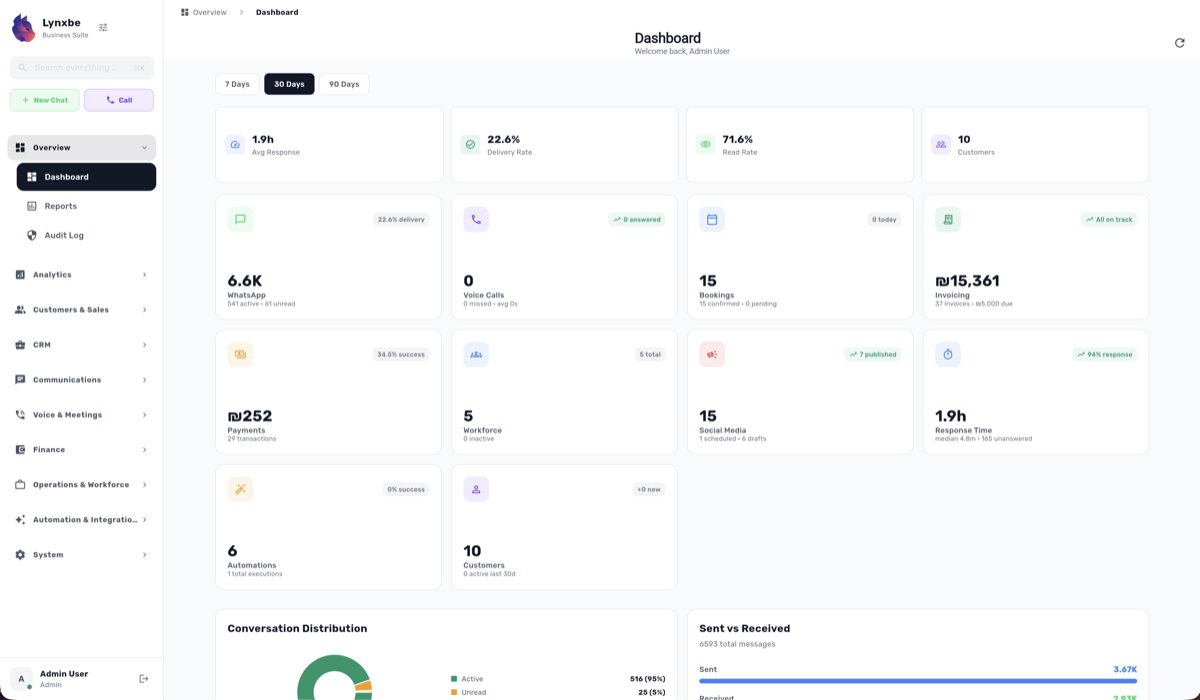
Additionally, a new data analysis module has been launched, allowing businesses to track the performance of their conversations. This module provides real-time data on open rates, response rates, and average response time. Thus, businesses can make immediate adjustments to their practices based on real data.
Impact on Businesses in Israel
The changes in the WhatsApp Business API interface directly affect how businesses in Israel communicate with their customers. Over the past decade, customers have become more demanding and expect fast and effective communication. The upgrades in the interface address this need and allow businesses to offer a higher level of customer service.
These upgrades enable businesses to adopt new and advanced marketing strategies focused on increasing customer engagement. For instance, businesses can use personalized messages to offer products or services based on the customer’s purchase history, which increases the likelihood that the customer will return to make another purchase.
Moreover, businesses can optimize their response times and reduce the burden on service teams. With the help of chatbots, businesses can automatically provide answers to frequently asked questions, allowing service teams to focus on more complex issues. This not only improves the customer experience but also saves time and money for the business.
Additionally, there is no doubt that the upgrades in the WhatsApp Business API interface will impact the market in terms of competitiveness. Businesses that adopt the new tools will be able to stand out in a competitive market and offer personalized experiences, while businesses that do not upgrade their systems may fall behind.
Tips for Implementing Changes Within the Organization
Implementing the new changes in the WhatsApp Business API interface requires careful planning and a deep understanding of the new tools. One important tip is to conduct training for the teams involved in customer service and marketing. This training will help them understand the new tools and maximize their capabilities.
Moreover, it is recommended to experiment with the new chatbots. Businesses can start with simple scripts and make adjustments based on customer feedback. This is an important process that allows the business to improve the bots and ensure they provide a good customer experience.
Additionally, it is crucial to monitor the data provided by the new interface. Businesses should dedicate time to analyze conversation data to understand what works and what does not. With proper analysis, continuous improvements can be made to the interface and customer service.
Finally, it is advisable to integrate the WhatsApp Business API with additional tools like CRM and automation. This integration will allow the business to manage customer information more systematically and automate marketing processes, such as sending personalized messages.
Practical Use Cases for Israeli Businesses
Many Israeli businesses have already begun to take advantage of the upgrades in the WhatsApp Business API interface. For example, the company "Shufersal" uses chatbots to provide customers with information about promotions and discounts, as well as to assist them in making purchases directly from the app. This not only streamlines the shopping experience but also increases customer loyalty.
The company "Ma'afari" uses the WhatsApp Business API to provide customer service available 24/7. Through chatbots, the company is able to answer frequently asked questions, such as delivery times and product information, thereby freeing the service team to handle more complex issues. This is an excellent example of effectively leveraging technology to improve service.
Additionally, an Israeli startup named "Click" offers CRM solutions integrated with the WhatsApp Business API. The company enables clients to manage their communication with their customers in a simple and efficient manner, utilizing the new features of the API. This allows businesses to manage customers better and increase their engagement.
Another company, "Israeli Music," uses the WhatsApp Business API to offer online workshop services. With personalized messages, they are able to offer workshops based on customers' interests, which increases participation and strengthens the connection with the audience.
Integration with Additional Tools like CRM and Automation
One of the significant advantages of the WhatsApp Business API is the ability to integrate it with additional tools like CRM and automation. This integration allows businesses to manage customer data more systematically. For example, when a customer communicates via WhatsApp, the information can be automatically transferred to the CRM system, ensuring that the entire customer history is available to the service team.
Through automation, businesses can set rules and perform automatic actions based on data. For example, if a customer has not purchased a product for a certain period, the system can send them a personalized message with a special offer, increasing the likelihood that they will return to purchase.
In addition, integration with data analysis tools allows businesses to track conversation performance and make continuous improvements. With this data, businesses can understand which messages and how they affect customers and make changes accordingly.
Finally, the integration of the WhatsApp Business API with additional automation solutions like Mailchimp or HubSpot allows businesses to optimize their marketing messages and focus their efforts in the right way. This way, emails and messages can be sent simultaneously, increasing the reach of campaigns.
Best Practices
To get the most out of the upgrades in the WhatsApp Business API interface, there are several best practices to adopt. First, it is advisable to keep track of market trends and examine what competitors are doing. This can provide new ideas and help identify opportunities.
Second, it is essential to maintain consistency in communication with customers. Proper management of information and personalized messages can enhance the customer experience and build loyalty. It is advisable to focus communication according to different target audiences and plan messages accordingly.
Third, it is recommended to dedicate time to analyze the data received from the system. With proper analysis, it is possible to understand what works and what does not, and make continuous improvements. This is an important process that can lead to better results in the long run.



Comments
💬 Share your thoughts