Guide to Transitioning to the WhatsApp Cloud API in Israel
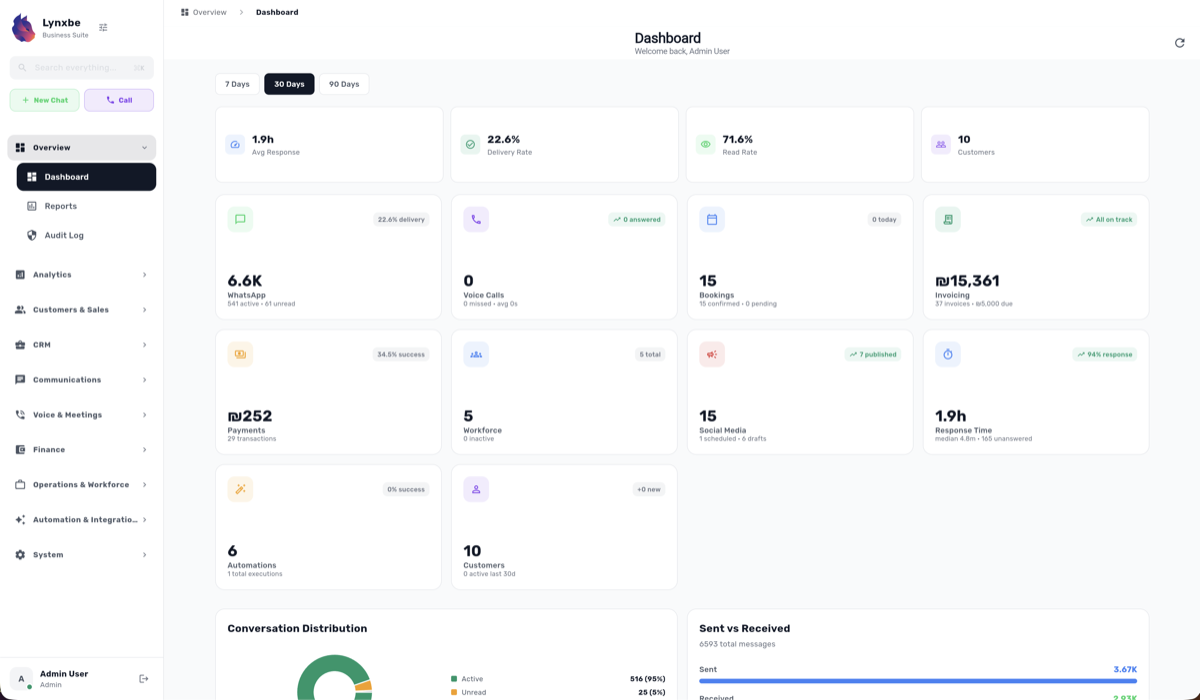
Guide to Transitioning to the WhatsApp Cloud API in Israel
In recent years, the digital revolution has changed the way we communicate, work, and manage businesses. One of the platforms that has achieved great success is WhatsApp, which has become one of the most popular applications in the world. With the transition to the WhatsApp Cloud API, businesses can leverage the potential of WhatsApp not only as a communication tool but also as an essential business instrument. In this article, we will delve into the guide for transitioning to the WhatsApp Cloud API in Israel, focusing on the reasons for the transition, the setup process, integrations with CRM systems, tips for improving customer service, and more.
The transition to the WhatsApp Cloud API is not just a technological upgrade but also an opportunity to support higher-level customer service. The system allows businesses to manage conversations with customers in an automated, fast, and efficient manner. This way, quick responses to inquiries can be provided, help can be given in solving problems, and the customer experience can be significantly improved. In this article, we will present the advantages of transitioning to the WhatsApp Cloud API and the recommended way to make the transition in Israel.
Familiarity with the WhatsApp Cloud API begins with understanding what an API is and how it works. An API (Application Programming Interface) is an interface that allows different software to communicate with each other. With the WhatsApp Cloud API, businesses can send and receive messages automatically, manage groups, send promotional messages, and more. This can save time and resources, allowing focus on the real needs of customers.
Reasons to Transition to the WhatsApp Cloud API
There are several key reasons to switch to the WhatsApp Cloud API. First, it is a platform that enables faster and more efficient communication with customers. Today’s customers expect immediate answers, and the ability to send automated messages can significantly enhance the customer experience.
Second, the WhatsApp Cloud API offers advanced automation tools that allow for intelligent conversation management. For example, automatic responses can be set up for frequently asked questions, redirecting the attention of representatives to cases that require more personal handling.
Third, the system offers integration with popular CRM systems, allowing businesses to manage customers in an organized and efficient manner. Real-time data transfer between systems can improve service and streamline operations.
Finally, transitioning to the WhatsApp Cloud API provides businesses with a competitive advantage. In an era where all information is available at the click of a button, the ability to respond quickly and efficiently is critical for any business looking to succeed.
Setup and Installation Process
The setup process for the WhatsApp Cloud API involves several relatively simple steps. The first step is to create an account on Facebook for Developers. You need to go to the website and register as a developer, then create a new application. This is a crucial step, as the application will serve as the foundation for all the functions you wish to implement.
Next, you need to set up the WhatsApp Business Account and obtain a phone number designated for use with the API. It is important to note that the number must be a new phone number or a number not currently in use for regular WhatsApp.
In the next step, you will need to configure the Webhook settings, which allow the system to send and perform automated actions. The Webhook can be set up to receive real-time updates on incoming messages, enabling the system to respond quickly.
After all the settings are configured, you can begin the integration process with your CRM system. This step involves connecting the WhatsApp API to the CRM system, allowing the system to utilize WhatsApp functions for customer conversations.
Integrations with CRM and Automation
One of the major advantages of the WhatsApp Cloud API is its tremendous capability for integration with CRM systems. Many businesses use CRM systems to manage information about their customers, and thus connecting the systems allows for more efficient management.
This integration allows businesses to send automated messages to customers, display important data in real-time, and perform additional actions easily. For example, if a customer contacts via WhatsApp with a question about an order, the system can automatically send a message with all the necessary details without waiting for a representative's response.
To illustrate this advantage, we will present an example of integration between WhatsApp and CRM using Python. The following code demonstrates how to send an automated message to a customer:
import requests

# API details configuration
url = "https://graph.facebook.com/v13.0/your_phone_number_id/messages"
headers = {
    "Authorization": "Bearer your_access_token",
    "Content-Type": "application/json"
}

# Message content configuration
message_data = {
    "messaging_product": "whatsapp",
    "to": "customer_phone_number",
    "text": {
        "body": "Thank you for reaching out, we will get back to you shortly!"
    }
}

# Sending the message
response = requests.post(url, headers=headers, json=message_data)

# Checking the request status
if response.status_code == 200:
    print("Message sent successfully!")
else:
    print("Error sending message:", response.json())
With this code, businesses can send automated messages to their customers and provide immediate responses to their inquiries. This is just one example among many, but it illustrates the immense potential of integration with WhatsApp.
Tips for Improving Customer Service
After transitioning to the WA Cloud API, it is important to maximize the system's impact on customer service. First, establish a list of frequently asked questions (FAQ) to provide quick responses to customer inquiries. This can include questions about products, services, delivery times, and more.
Second, it is important to track conversation data. By analyzing data, businesses can understand which issues concern customers and thus improve the responses provided. For example, if it turns out there are many questions regarding the product return process, the information provided on this topic can be upgraded.
Third, it is recommended to use automation tools to streamline communication. For example, automated reminders can be set up for customers regarding appointments, payments, or special promotions. This not only saves time but also maintains continuous contact with customers.
Finally, ensure a thorough training process for representatives. It is important that representatives know how to use the system optimally and how to respond to various customer inquiries. Good training can significantly enhance the customer experience.
Case Studies from the Israeli Technology Scene
After understanding the advantages and opportunities provided by the WhatsApp Cloud API, we will review several case studies from Israeli technology companies that have transitioned their service systems to the WA Cloud API.
The company "Pelephone", one of the leading communication companies in Israel, adopted the WhatsApp Cloud API as a central tool in its customer service. With the system, it managed to reduce customer waiting times from hours to minutes, significantly increasing satisfaction levels.
Another company is "Wolt", which offers food delivery services. Wolt used the WhatsApp Cloud API to improve communication with customers, especially when deliveries are delayed. Through automated messages updating customers on the delivery status, the company was able to enhance the customer experience and reduce the volume of inquiries to the service center.
Additionally, an Israeli startup called "Gett", which offers transportation services, used the WhatsApp Cloud API to streamline communication with drivers and customers. The system allows customers to track their ride in real-time, reducing the number of questions regarding the driver's location and increasing the reliability of the service.
Conclusions and Action Tips
In conclusion, transitioning to the WhatsApp Cloud API is an essential step for any business looking to upgrade its customer service. With an understanding of how to set up the system, automate communication, and perform integrations with existing systems, businesses can maximize the potential of this platform.
Our recommendation is to start cautiously, test the various functions of the system, and conduct trials with selected customers before making the general transition. This way, you can understand what works and



Comments
💬 Share your thoughts