Integration of WhatsApp Business API with CRM: A Guide for Businesses in Israel

In today's digital age, businesses face new challenges when it comes to connecting with their customers. One of the most effective ways to increase engagement and communication with customers is through the WhatsApp Business API. Integrating WhatsApp with a CRM (Customer Relationship Management) system can enhance the customer experience and streamline business processes. This guide is intended for businesses in Israel looking to understand how to implement this integration in the best way possible.
The most significant advantage of using the WhatsApp Business API is the ability to communicate with customers in a personal and immediate manner. When customers feel they are receiving quick and accurate responses, they tend to feel more connected to the business. The integration with a CRM system allows for organized tracking of all interactions with customers, granting the business the ability to analyze data and improve service.
In this guide, we will review the advantages of integrating WhatsApp with CRM, detail the steps for setup and implementation, provide examples of real-world uses in businesses, and share tips for optimizing the customer experience. This information is crucial for every business owner, software developer, or technology manager looking to upgrade their systems and create better relationships with their customers.
Advantages of Integrating WhatsApp with CRM
Integrating WhatsApp with a CRM system brings numerous advantages that provide a competitive edge in the market. One of the central benefits is the ability to provide immediate support and quick responses to customer inquiries and needs. In an era where customers expect instant answers, using WhatsApp allows for convenient and efficient support.
Another advantage is the ability to drive sales easily. Through WhatsApp, businesses can send direct links to products and services, enabling customers to make purchases effortlessly. Additionally, the CRM system can maintain a history of purchases and interactions with customers, streamlining the marketing process and allowing the business to tailor offers to the specific needs of each customer.
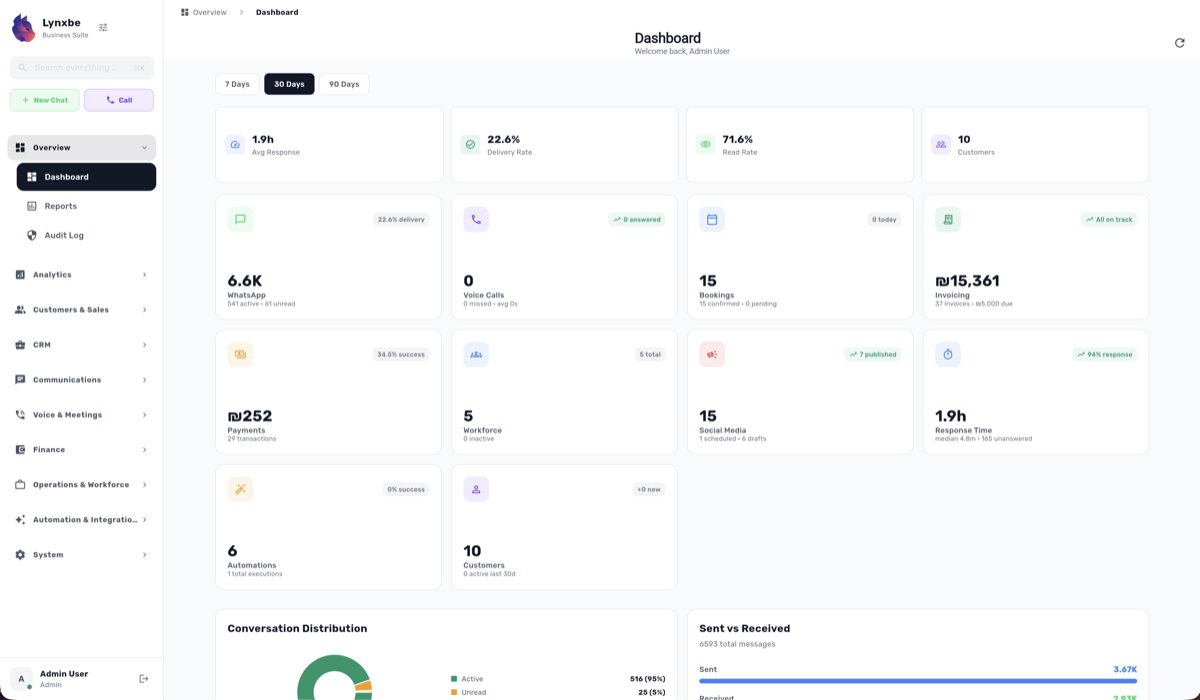
Another important advantage is data analysis. Integrating WhatsApp with a CRM system allows tracking of various metrics such as real-time response rates, wait times, and sales data. With this data, businesses can understand what works and what doesn’t, and make real-time adjustments to improve service.
Setup and Implementation Steps
To begin integrating the WhatsApp Business API with a CRM system, several steps must be followed. The first step is obtaining access to the WhatsApp Business API. To do this, a request must be submitted through an approved WhatsApp service provider. This process may include business verification and the submission of required information.
After gaining access, the API must be installed on the business's servers. It is crucial to ensure that the developers or IT personnel within the business are prepared to perform the installation professionally to avoid future issues. It is important to verify that the servers meet system requirements and can support the expected message volume.
After installation, integration between the API and the CRM system in use must be performed. This is a critical step, as it allows the CRM system to function as the central contact point with customers. Incoming and outgoing messages must be configured, and the information that updates in the CRM system must be tailored according to interactions with customers.
Examples of Real-World Uses in Businesses
Now, let's examine some examples of real-world uses of integrating WhatsApp with CRM in businesses in Israel. For instance, the "Mega" retail company uses the WhatsApp Business API to provide customer support. When a customer sends a message regarding a specific product, the system identifies the customer and provides relevant information about the product, including availability and prices.
Another example is the "Makeup Artists" company, which offers cosmetic services. They use WhatsApp to schedule appointments with clients. When a client requests to book an appointment, the system sends an automatic message with available options, allowing customers to select the date and time that suit them with the click of a button.
In the technology sector, "IronSource" uses the WhatsApp Business API to support developers utilizing their systems. They manage to operate quickly and efficiently, providing answers to technical questions in real time, which helps maintain satisfied customers.
Tips for Optimizing the Customer Experience
To maximize the benefits of integrating WhatsApp with CRM, there are several tips that can enhance the customer experience. The first is to be available. Customers expect quick responses, so it is important to have a support team that can respond to messages in real time.
Another tip is to use automated messages wisely. For example, when a customer sends a message during off-hours, an automated message can be set up to inform them of the business's operating hours and provide answers to frequently asked questions.
It is also important to tailor communication to customer needs. For instance, personalized marketing campaigns can be sent via WhatsApp based on purchase history and previous interactions with customers.
Practical Insights and Conclusions
Integrating the WhatsApp Business API with a CRM system is an important step for any business looking to improve communication with its customers. In an era where customers expect fast and personal service, using WhatsApp can provide a significant competitive advantage.
Businesses in Israel can leverage advanced technologies to implement this integration smoothly. With proper planning and precise definition of processes, a high-quality and professional customer experience can be ensured.
If you are technology managers, developers, or business owners, now is the time to start considering the implementation of WhatsApp Business API in your business. Investing in quality customer service can elevate your brand and increase customer loyalty.
Summary and Further Instructions
At the end of the guide, we recommend reviewing the steps mentioned and planning the process of integrating WhatsApp with your CRM system. Set clear goals, invest in the necessary resources, and start implementing improvements as soon as possible.
If you have further questions or would like to receive professional advice, do not hesitate to reach out to experts in the field. The integration of the WhatsApp Business API with CRM is a significant and worthwhile step that can upgrade your business in unprecedented ways.



Comments
💬 Share your thoughts