The Complete Guide to Small Business: Automation Using WhatsApp API
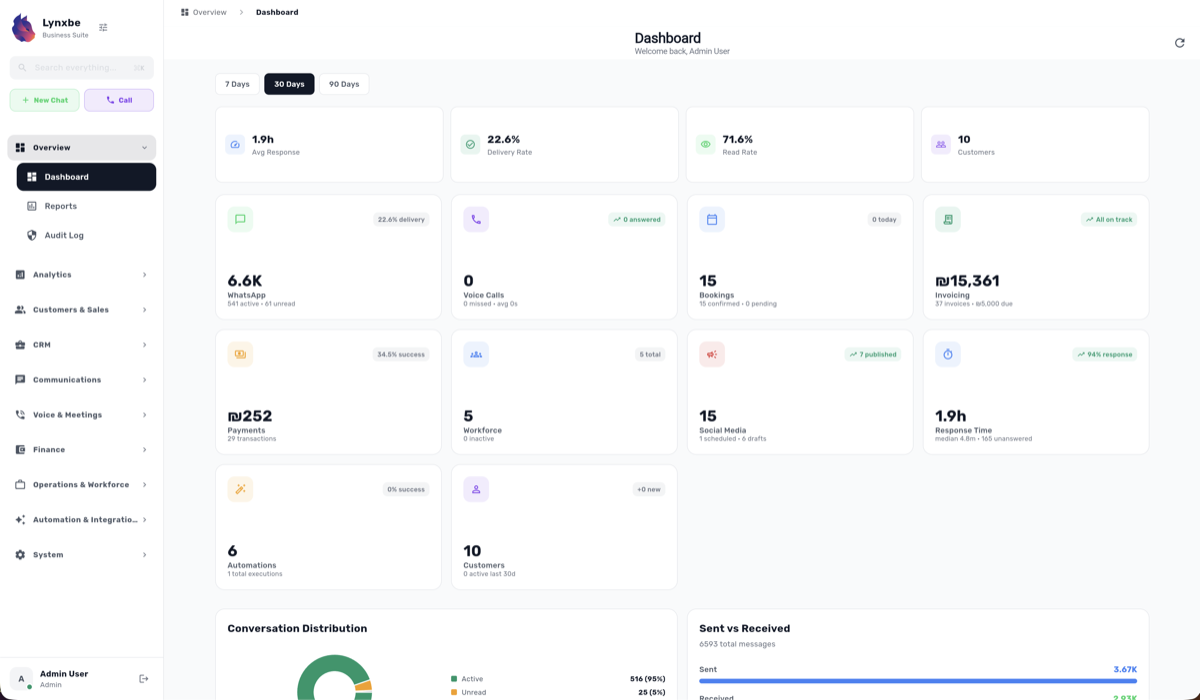
In the modern reality, fast and efficient communication with customers is not just a competitive advantage, but a necessity for small businesses. As customers expect quick responses to their inquiries, it is important for businesses to adopt automated technologies that can enhance the customer experience. One of these technologies is the WhatsApp API, which allows businesses to communicate with their customers in an automated and efficient manner.
In an era where every second counts, automation can save a lot of time and help businesses manage their customer communication smoothly. With the WhatsApp API, businesses can send automated messages, update customers on orders, and provide technical support, all in real-time. This post offers a complete guide on how to implement automation in a small business using the WhatsApp API.
In this article, we will review the benefits of automation in customer communication, learn how to implement the WhatsApp API in your business, examine how to integrate the technology with CRM systems for customer management, and provide practical examples from Israeli businesses that have succeeded. The guide is aimed at technology professionals, developers, startup founders, and CTOs who are interested in understanding the power of automation in customer communication.
To understand the powers of automation, we first need to examine its benefits in communicating with customers. When it comes to small businesses, every customer is important. Automation using the WhatsApp API not only allows for quick responses but also enhances the customer experience. Customers who do not receive prompt replies may turn to competing businesses, so it is crucial to ensure that communication is available at all times.
Automation also reduces the burden on the customer service team. Instead of requiring personal attention for every inquiry, automated messages can be set up to provide basic information or direct customers to additional resources. This allows the team to focus on more complex inquiries while maintaining a high level of service.
Automation also brings economic benefits. By saving time and manpower, businesses can reduce costs and improve efficiency. However, it is important to implement the technology correctly to maximize its benefits. So how do you do that?
The first step in implementing the WhatsApp API in your business is to register for the service. You need to apply for the WhatsApp Business API through an approved provider. This process may include verifying your business, so it is important to prepare all necessary documents in advance.
After receiving approval, the next step is to set up the API. This includes determining the phone number you will use to communicate with customers, as well as additional settings such as setting up automated messages. Services like Twilio or MessageBird can be used to facilitate the process.
The next step is to develop the automation. This can include setting up the sending of automated messages based on certain parameters, such as responding to frequently asked questions or updating customers on the status of their orders. By writing custom code, you can optimize communication and provide fast and quality service.
Here is a simple example of Python code that uses the WhatsApp API to send an automated message:
import requests

# Define parameters
url = "https://api.your-service.com/send-message"
payload = {
    "phone": "customer's phone number",
    "message": "Hello! How can we assist you today?"
}

# Send the request
response = requests.post(url, json=payload)

# Check the response
if response.status_code == 200:
    print("Message sent successfully!")
else:
    print("Error sending message:", response.text)
After setting up the automation, the next step is to integrate the WhatsApp API with your CRM system. A CRM (Customer Relationship Management) system is an essential tool for any small business, and automation with WhatsApp can enhance the management of your customer relationships.
By integrating the WhatsApp API with your CRM, you can track communication with customers, manage inquiries easily, and provide advanced support. For example, you can set up automated messages to be sent when a customer reaches out with an issue, thus streamlining the support process.
This integration brings many benefits, such as proper management of inquiries, the ability to send automated updates to customers, and reducing the burden on the support team. Businesses that understand the power of CRM combined with the WhatsApp API can significantly improve their customer experience.
How can customer service be optimized through automation? First of all, it is important to define a clear policy regarding the types of inquiries that can be answered automatically. For example, if customers inquire about opening hours or prices, automated messages can be set up to provide that information.
Additionally, automation processes can be created for more complex inquiries. For instance, if a customer reaches out with a technical issue, a process can be set up where the message is forwarded to the appropriate team for immediate handling. This way, customers will receive the right response quickly and efficiently.
Moreover, automated surveys can be conducted after every interaction with customers. This allows for collecting feedback and improving service according to customer needs. In this way, businesses can ensure they are heading in the right direction.
Now, let's look at practical cases of Israeli businesses that have successfully utilized the WhatsApp API to enhance their service. One prominent example is "Wix", which allows website owners to easily build websites. The company used the WhatsApp API to improve communication with its customers, including sending automated messages with tips and tutorials after purchasing services.
Another example is "Pelephone", which used the WhatsApp API to provide technical support to customers. Instead of waiting in line to speak with a representative, customers can send messages and receive quick responses to technical issues, which has led to a significant improvement in customer experience.
Another business is "Shufersal", which used the WhatsApp API to send updates on promotions and discounts to customers. The information is sent automatically to registered customers, resulting in a significant increase in sales.
Of course, there are many more examples, but what they all have in common is the significant improvement in customer service and shopping experience. The combination of the WhatsApp API with automation allows businesses to be more available to their customers and provide high-level services.
To succeed in using the WhatsApp API, there are several tips that can help. First, it is important to set clear goals. Is the goal to improve customer service? Increase sales? The clearer the goals, the better the automation can be tailored.
Additionally, it is important to regularly check the performance of the automation. By analyzing data, you can understand what works and what doesn’t, and make improvements accordingly. Every small change can lead to significant improvements in the customer experience.
Furthermore, it is advisable to listen to customers. Feedback from customers is a valuable tool that is sometimes overlooked. It is important to maintain a dialogue with customers and ask them to provide feedback on their experiences with the automation.
At this point, let's review the main points of the article. Automation using the WhatsApp API can significantly upgrade your service to customers. It provides the possibility for quick communication, reduces the burden on the service team, and improves the customer experience.
To implement the technology correctly, you need to register for the WhatsApp Business API, set up the necessary configurations, and integrate the API with your CRM system. Additionally, it is advisable to focus on automating processes that can enhance service and to examine examples from Israeli businesses that have successfully used this technology.
In conclusion, if you are a small business owner in Israel, now is the time to embrace automation. And if you are unsure about the next step, it is recommended to start with the WhatsApp API. This will allow you to offer better quality service, streamline communication with your customers, and build better relationships with them.
So go ahead, don't hesitate to take action! Automation is waiting for you.


Comments
💬 Share your thoughts