Do your customers see you? Customer Relationship Management on WhatsApp
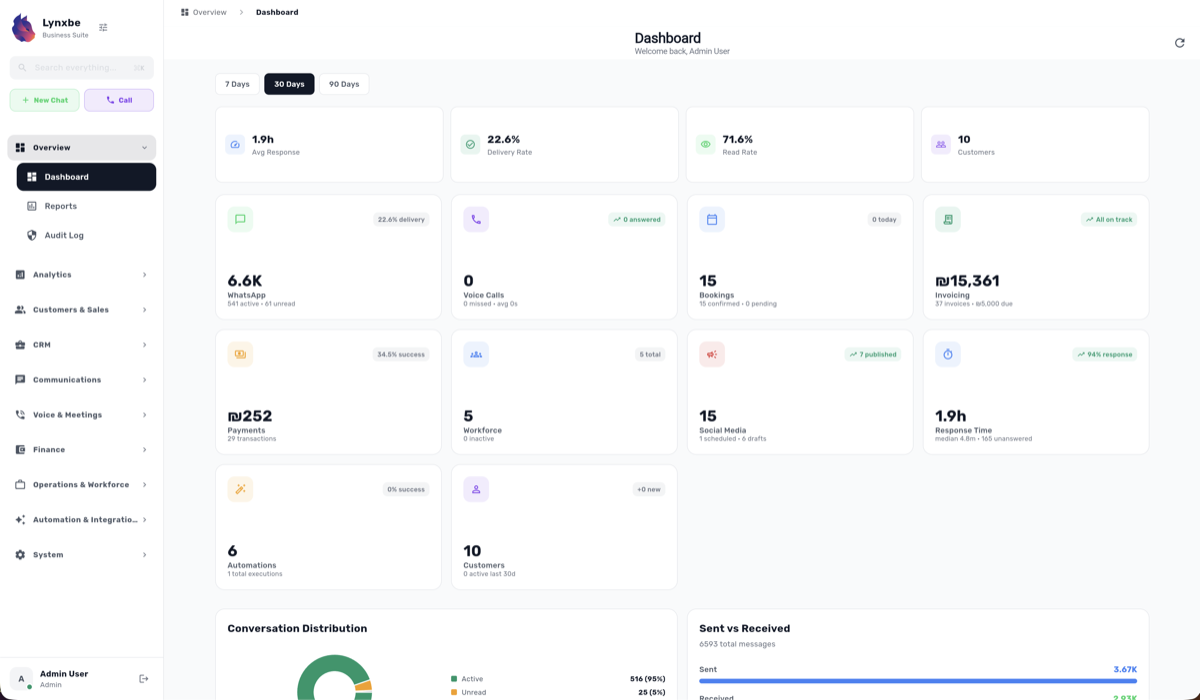
In the modern digital age, customer relationships are an integral part of the success of any business, especially for technology companies and startups. One of the most popular platforms today is WhatsApp, which offers flexible and effective solutions for managing customer relationships. If you run a business or work in the technology field, it is important to understand how to leverage the WhatsApp Business API to enhance your connection with your customers.
When your customers see you and communicate with you easily, it can significantly improve the customer experience and satisfaction levels. In the following sections, we will conduct an in-depth review of the advantages of the WhatsApp Business API, techniques for improving service, integration with CRM systems, personalized marketing content, and more. The goal is to equip you with the tools and knowledge necessary to leverage this platform for your business.
The field of customer relationship management is changing rapidly, and the technologies that assist in achieving connections with customers are constantly evolving. WhatsApp is one of the platforms that have become an integral part of the dialogue between businesses and customers. With over 2 billion users worldwide, it is easy to understand why businesses turn to this platform to improve their relationships with their customers.
Let's dive into the details of using WhatsApp for customer relationship management. We will examine the existing advantages of using the WhatsApp Business API, techniques for improving service, and integration with a CRM system. All of these will help you understand how to manage relationships with customers effectively and professionally.
Advantages of WhatsApp Business API
WhatsApp Business API offers many advantages for businesses. One of the standout benefits is the ability to communicate with customers in real-time. Customers expect quick responses, and WhatsApp allows you to provide this service effectively. In an age where time is money, the ability to respond to customer questions or issues immediately can significantly impact the customer experience.
Another advantage is the ability to send personalized messages. Using the WhatsApp Business API, businesses can send marketing messages, product updates, and even appointment reminders. Personalized messages not only increase the likelihood of customer responses but also convey a sense of care.
Additionally, the WhatsApp Business API offers automation capabilities. Businesses can use bots to answer frequently asked questions, provide basic information about products and services, or even manage sales processes. This can save employees a lot of time and improve the customer experience.
Finally, the WhatsApp Business API offers a high level of security. Communication between the business and customers is encrypted, preventing unauthorized access to sensitive information. This is a significant advantage for businesses managing sensitive customer data.
Techniques for Improving Service via WhatsApp
To improve service via WhatsApp, it is important to know how to leverage the tools the platform provides. First, invest in training your team. Every employee who communicates with customers through WhatsApp should understand the appropriate rules, tone, and style. Customers expect professional communication, so it is important that employees know how to formulate messages clearly and professionally.
Second, use message templates. The WhatsApp Business API allows the use of pre-prepared messages to save time and maintain consistency in communication. For example, a message about system outages or updates on product availability can be prepared in advance and easily sent to all customers.
Third, data analysis is an important tool for improving service. By analyzing messages and customer responses, you can understand which types of messages achieve the best response and which areas require improvement. This is an ongoing process that can enhance the customer experience over time.
Also, do not forget the importance of availability. Customers expect quick responses, so it is essential to set clear working hours and ensure that there is a team available to respond during business hours. You may also consider using bots to manage messages during off-hours.
Integration with CRM for Efficient Management
One of the most effective integrations when using the WhatsApp Business API is with a CRM system. When a CRM system is connected to WhatsApp, it is possible to manage customer relationships efficiently and orderly. Every message sent or received is recorded in the system, allowing employees to access the conversation history with each customer.
Integration with CRM also allows for process automation. For example, new customers can be added to the CRM system directly from WhatsApp conversations, or automatic messages can be sent to new customers with details about your products and services.
Additionally, this integration allows for analyzing the information collected from conversations. This information can be used to identify trends, understand customer needs, and assist in business decision-making. By analyzing the data, businesses can tailor their products and services to meet customer needs.
Finally, it is important to emphasize that integration with CRM also allows for more precise management of marketing campaigns. Customers can be segmented according to various criteria, and personalized messages can be sent to them, increasing the likelihood of sales.
Personalized Marketing Content
Personalized marketing content is an integral part of every business strategy. Through WhatsApp, you can send content tailored to each customer. For example, if a customer purchases a specific product, you can send them updates on similar products or future discounts. This is an excellent way to retain the customer and encourage them to make another purchase.
Additionally, you can use WhatsApp to send educational content. For example, if you offer technology services, you can send customers tips and guides for using your products. This not only keeps customers informed but also helps build a stronger relationship with them.
Moreover, marketing content can include updates on events, new product launches, or special offers. These messages not only provide information to customers but also create a sense of connection with your brand.
Finally, it is important to track customer responses to marketing content. Analyzing responses can help understand what works and what needs improvement. Based on this information, you can adjust future content according to the needs and expectations of customers.
Practical Cases from the Israeli Technology Scene
In the Israeli technology world, there are many examples of companies that have successfully leveraged the WhatsApp Business API to improve customer relationships. One of them is "Wolt," which offers delivery services. Wolt integrated WhatsApp for communication with customers, allowing them to provide real-time updates on the status of orders. Customers can ask questions and receive quick responses, leading to high satisfaction levels.
Another example is "Gett," which offers transportation services. Gett uses WhatsApp to send updates to customers about vehicle availability and trip details. The integration between WhatsApp and their CRM system allows them to manage orders in an orderly manner and provide fast and efficient service.
Another company is "Fiverr," a freelancing platform that uses WhatsApp to communicate with its users. Fiverr sent personalized messages to users about new opportunities, making them feel valued in their relationships with the company.
Finally, "Lynxbe" itself, specializing in software development, uses the WhatsApp Business API to communicate with potential customers. The company sends personalized messages to customers, offers technical support, and provides updates on new developments. The use of WhatsApp has improved the relationship with customers and increased satisfaction.
Best Practices and Tips
To get the most out of using WhatsApp, there are several best practices worth adopting. First, be consistent in your communication. Customers expect continuous communication, so it is important to send messages at regular intervals and not leave customers in a state of uncertainty.
Second, ensure professionalism. Even if you are using a more informal platform like WhatsApp, it is important to maintain a professional tone. This includes using standard language, avoiding overly conventional messages, and ensuring proper punctuation.
Third, take advantage of automation options. Bots can ease the burden on your team and allow them to focus on more important tasks. Invest in an automated system that provides answers to frequently asked questions and enhances the customer experience.
Finally, do not forget to track results. Analyzing conversation data, customer responses, and the successes of your campaigns can help you understand what works and what needs to change. Spend time analyzing the data to improve your strategies.

Comments
💬 Share your thoughts