How to Optimize Your Business with WhatsApp Cloud API
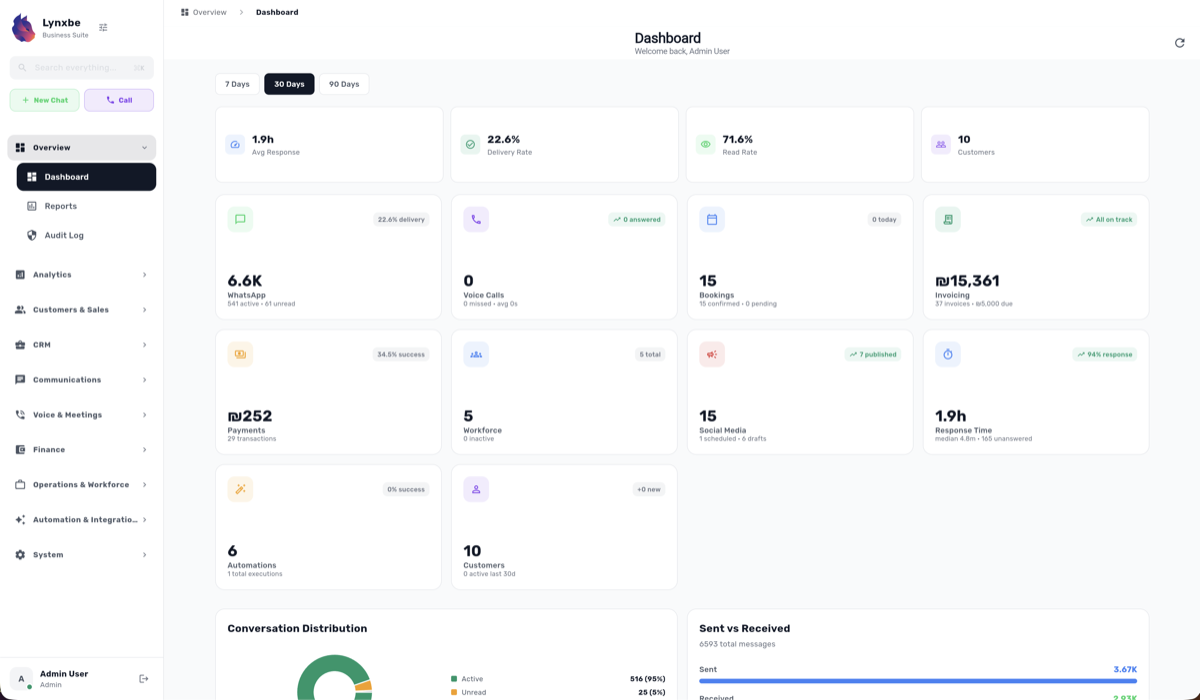
In today's digital age, businesses face numerous challenges in maintaining relationships with their customers. One of the most effective ways to do this is through instant messaging platforms like WhatsApp. The WhatsApp Cloud API offers advanced solutions that allow businesses to streamline their services, improve communication with customers, and automate various processes. In this article, we will explore how to leverage the WhatsApp Cloud API to give your business a competitive edge.
The WhatsApp Cloud API provides a wide range of new features that enable businesses to communicate with their customers more quickly and efficiently. With the ability to send text messages, images, files, and make calls, businesses can deliver customer service in a more intuitive manner. Furthermore, the integration of WhatsApp with existing CRM systems allows businesses to manage customer relationships in a more focused and professional way.
Many businesses in Israel have already begun to adopt the WhatsApp Cloud API as a primary tool for enhancing their customer service. What are the benefits of using this technology? How can it be integrated into existing systems? In this article, we will delve into each of these topics and present case studies from the Israeli content world.
Before we begin, it is important to understand the new features of the WhatsApp Cloud API. The platform offers a simple and intuitive interface that allows businesses to send and receive messages via the API easily. The features include support for sponsored messages, the ability to send automated messages, files, images, videos, and everything related to communication with customers.
Understanding the New Features of WhatsApp Cloud API
The WhatsApp Cloud API offers several essential features that can enhance the customer experience. One of the key features is the ability to send sponsored messages, which allows businesses to promote products and services directly to customers. This is an excellent way to increase exposure and conversion of potential customers.
Additionally, the WhatsApp Cloud API supports automated messages, enabling businesses to provide answers to frequently asked questions in real-time. This system can be integrated with chatbots that interact with customers automatically, freeing up support staff to handle more complex inquiries.
Integrating WhatsApp with CRM systems allows businesses to manage customer interactions more systematically. For example, the platform can be integrated with Salesforce or HubSpot, so that every message sent or received is recorded in the CRM system, allowing for tracking the history of each customer.
How to Integrate the Platform with Existing CRM
Integrating WhatsApp with a CRM system is a crucial step in any business communication strategy. To achieve this, you can use the WhatsApp API to create integration with the existing platform. First, ensure that your system supports the use of an external API.
Next, follow the WhatsApp Cloud API guide to connect the systems. This includes setting up tokens, establishing endpoints for sending and receiving messages, and configuring webhooks to receive notifications about new messages.
Here is a basic example of how to send a WhatsApp message from a CRM system. Suppose you want to send a welcome message to new customers:
import requests

url = "https://graph.facebook.com/v13.0/YOUR_PHONE_NUMBER_ID/messages"
payload = {
    "messaging_product": "whatsapp",
    "to": "CUSTOMER_PHONE_NUMBER",
    "text": {
        "body": "Welcome to our business! We are happy to meet you."
    }
}
headers = {
    "Authorization": "Bearer YOUR_ACCESS_TOKEN",
    "Content-Type": "application/json"
}

response = requests.post(url, json=payload, headers=headers)

print(response.json())
In this example, we use the requests library of Python to send a message to the customer. You need to replace YOUR_PHONE_NUMBER_ID, CUSTOMER_PHONE_NUMBER, and YOUR_ACCESS_TOKEN with the appropriate values for you. You can then integrate this code into your CRM system so that messages are sent automatically.
Automated Methods to Improve Customer Service
Automating processes in customer service can significantly enhance the customer experience. Using the WhatsApp Cloud API, businesses can create chatbots that provide answers to frequently asked questions and perform simple actions like scheduling appointments or updating customer information.
For example, if a customer contacts customer service with a question about product availability, they can receive an automated response within seconds. This is a solution not only for saving time but also for improving customer satisfaction. On the other hand, if the question is more complex, the chatbot can transfer the conversation to a human representative.
Additionally, WhatsApp can be used to send automated notifications to customers about order status, appointment reminders, or updates on new promotions. This is an excellent tool for maintaining continuous contact with customers and enhancing their loyalty.
Case Studies from Successful Israeli Businesses
Let’s examine several case studies of Israeli businesses that have used the WhatsApp Cloud API to enhance their service. One of the businesses is the food chain "Shufersal," which began using WhatsApp to allow customers to place orders directly through the messaging app.
As a result of using WhatsApp, Shufersal managed to increase the number of orders by 30% within just three months. Customers reported a more convenient shopping experience, and the ability to place orders without waiting in line made the service more attractive.
Another business is "Wolt," a delivery service that used WhatsApp to improve communication with customers during the delivery process. Through automated messages, customers received updates on the status of their orders, which reduced the number of inquiries to customer service and increased satisfaction levels.
Both of these cases demonstrate how using the WhatsApp Cloud API not only improved the customer experience but also impacted business success. It is a tool that can enhance communication and significantly streamline service processes.
Best Practices and Tips
To make the most of using the WhatsApp Cloud API, here are some tips that can help: First, ensure that the messages you send are relevant and targeted. Customers appreciate personalized communication, so it's important to tailor messages to their needs.
Second, use automation wisely. Chatbots can be a great tool, but it’s essential to ensure they accurately understand customer inquiries. Investing in training the chatbots can significantly enhance the customer experience.
Finally, monitor responses and make adjustments accordingly. Using analytical tools can help understand what works and what doesn't, allowing for continuous improvements.
Actionable Insights and Takeaways
In conclusion, the WhatsApp Cloud API offers businesses an excellent opportunity to enhance their services and improve communication with customers. In an era where customers expect quick and efficient responses, using advanced technologies like WhatsApp can provide a significant competitive advantage.
Whether it's automating processes, integrating with CRM systems, or using sponsored messages, the possibilities are numerous. It's important to remember that the key to success lies in understanding your customers' needs and making continuous adjustments accordingly.
If you are a business manager or entrepreneur, consider leveraging the potential of the WhatsApp Cloud API. Start with a small trial, learn from the insights gained, and progress accordingly. Using advanced technologies will not only improve the customer experience but can also lead to significant business successes.
Finally, if you would like to receive more information about the WhatsApp Cloud API and how our services at Lynxbe can assist you, do not hesitate to get in touch. We are here to help you optimize your business and guide you every step of the way.
Comments
💬 Share your thoughts